
Tag Archives: NYSLRS loan

Taxes and Your NYSLRS Loan

If you’re thinking about borrowing against your retirement contributions, it’s important to understand whether your NYSLRS loan will be subject to taxes before you apply. Once you submit a loan application and we issue a check, you cannot return an uncashed check, and the loan fee is nonrefundable.

Determining the Taxability of Your NYSLRS Loan

When you apply for a NYSLRS loan, all your existing NYSLRS loans and any loans against other retirement plans will be used in calculating the taxability of a new NYSLRS loan. If you participate in another retirement plan offered through your employer, you must disclose existing loans and the contribution balances for the following types of plans:

  • Deferred compensation plan (457)
  • Tax sheltered annuity plan (403-b)
  • Qualified annuity plan (403-a)
  • Qualified trust (401)

If You Have Existing NYSLRS Loans

If you have one or more NYSLRS loans and are considering another loan, you’ll have two options:

  1. Multiple loans. With multiple loans, you would take out a new loan in addition to your existing loan(s). Each loan would have separate 5-year terms and minimum payments. The minimum payments for all your loans would be combined into one total repayment amount, which would be higher than the minimum payment for a refinanced loan. However, your total minimum payment would decrease as you pay off each loan.
  2. Refinance your existing loan. With refinancing, your new loan would be consolidated with the balance of your existing loan(s) into a single loan for the entire amount. The total loan amount would be spread over a new 5-year term with one minimum payment, which would be lower than the total minimum payment for multiple loans. However, refinancing would increase how much of your loan is considered a taxable distribution, which would either subject the loan to federal taxes or significantly reduce the amount of the loan to avoid any tax implications.

Understanding the Impact on Your Taxes

While a NYSLRS loan is exempt from New York State and local income taxes, it may be subject to federal taxes. If your loan exceeds certain limits, the Internal Revenue Service (IRS) will consider all or part of it as a “deemed distribution from a qualified retirement plan.” In other words, you will have to claim all or part of your loan as taxable income when you file your taxes the next year.

NYSLRS is also required to withhold a percentage of the loan for federal taxes, which will reduce the amount you receive. The tax withholding depends on your citizenship, so the loan application asks if you are a U.S. citizen, resident alien or non-resident alien. However, the amount withheld may not cover the total amount you will owe the IRS. For example, if you take a taxable loan before you turn 59½, the IRS may charge an additional 10 percent tax penalty.

If you take a taxable loan, we’ll mail a 1099-R by January 31 of the following year to file with your taxes.

Remember: Even if a portion of your loan goes to the IRS, you’ll still have to repay the entire amount, plus interest, to NYSLRS.

We recommend that you speak to a tax advisor or a NYSLRS customer service representative before taking a taxable loan. For more information about taking a loan from NYSLRS, visit our Loans: Applying and Repaying page.

Ready to Apply for a NYSLRS Loan?
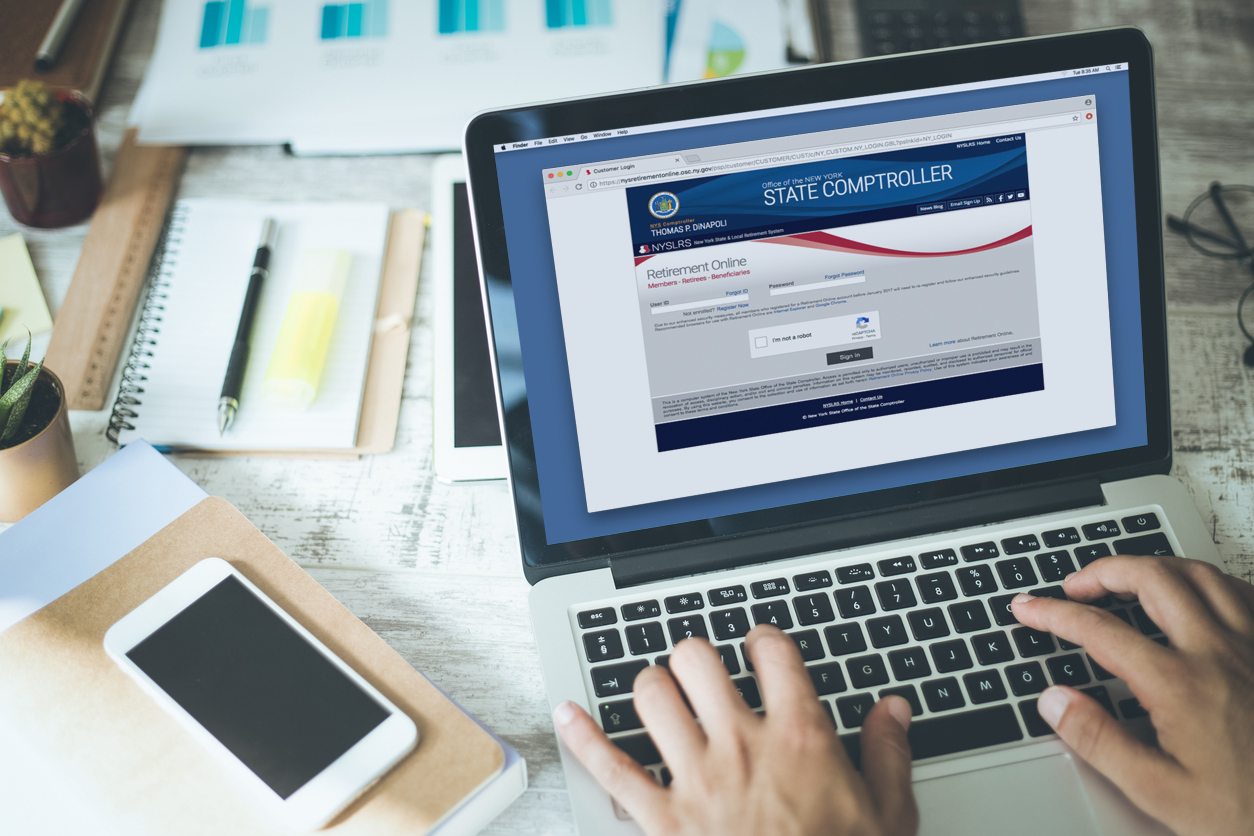
Taxes and Your NYSLRS LoanRetirement Online is the fastest and most convenient way to apply for a NYSLRS loan. When you use Retirement Online, NYSLRS receives your application immediately and can process your loan more quickly. Retirement Online will also let you know how much you can borrow, your repayment options and whether your loan is taxable.

If you don’t have an account or for help signing in to an existing account, check out our Retirement Online tools and tips for step-by-step instructions to register, reset your password, unlock your account and more.


Making Loan Payments if You Leave Public Employment

When you apply for a NYSLRS loan, you choose a repayment amount and your employer deducts your payments from your earnings. If you leave public employment or go off payroll before retiring (for example, a furlough, leave of absence or termination), you’ll need to make loan payments directly to NYSLRS at least quarterly and repay the loan within five years to avoid defaulting. 

(Note: If you are planning to retire soon and you have an outstanding NYSLRS loan, it’s important to understand the implications of retiring with an outstanding loan.)

Making Loan Payments

If you leave public employment, contact us as soon as possible so we can tell you the amount you’ll need to repay each quarter. You are responsible for the repayment of your loan.

Use Retirement Online

Even if you go off the public payroll, Retirement Online is the fastest and most convenient way to manage your loan payments. You can make additional payments or pay your loan in full at any time with no prepayment penalties.  

If you don’t already have an account or for help signing in to an existing account, check out our Retirement Online tools and tips for step-by-step instructions to register, reset your password, unlock your account and more.

Pay by Check or Money Order

Make your check or money order payable to the New York State and Local Retirement System and write “loan payment” and your NYSLRS ID on your check so we can ensure it’s applied to the correct account.

Mail payments to:

NYSLRS
Attn: Accounts Receivable
110 State Street
Albany, NY 12244-0001

Making Loan Payments if You Leave Public Employment

Defaulting on Your Loan

If you fail to make quarterly payments or you do not repay your loan within five years, your loan will go into default.

If you default on your loan:

  • We’re required by law to report your outstanding loan balance to the Internal Revenue Service (IRS) as a taxable distribution to you.
  • You must include the loan on your federal income tax return for the year the loan defaults. We’ll mail a 1099-R by January 31 of the following year to file with your taxes.
  • If you are younger than 59½ in the year the loan defaults, the IRS may charge an additional 10 percent tax penalty.
  • You still owe NYSLRS the amount of the outstanding loan, which will continue to accrue both interest and insurance charges until it is paid in full. If you retire with the outstanding loan, your pension will be reduced. If you withdraw your NYSLRS membership, we will deduct the outstanding loan balance from the refund of your contributions.

Note: Defaulted loans do not appear on your credit history.

For More Information

For more information about your NYSLRS membership and benefits if you leave public employment before you are eligible to retire, read our blog post, Know Your Benefits: What If I Leave Public Employment.

For more information about NYSLRS loans, visit our Loans: Applying and Repaying page.

Applying for a NYSLRS Loan in Retirement Online

If you are eligible to borrow against your retirement contributions, Retirement Online is the fastest and most convenient way to apply for a NYSLRS loan.

Eligibility is based on your tier. Generally, you’ll need to be on the payroll of a participating employer, have at least one year of service credit and have the required minimum contributions in your account. (Note: Retirees are not eligible for NYSLRS loans.)

Applying for a NYSLRS Loan in Retirement Online

Retirement Online is the Fastest Way to Apply

When you use Retirement Online, NYSLRS receives your application immediately and can process your loan more quickly.

To get started:

If you don’t have an account or for help signing in to an existing account, check out our Retirement Online tools and tips for step-by-step instructions to register, reset your password, unlock your account and more.

As you work your way through the online application, you’ll see:

  • How much you are eligible to borrow with or without tax implications;
  • The minimum repayment amount; and
  • The expected payoff date.

For Tier 3–6 members, there’s a service charge of $45, which is deducted from your loan check when it is issued.

The current interest rate, which is fixed for the term of your loan, is 5 percent.

NYSLRS loans are exempt from New York State and local income taxes. However, a NYSLRS loan would be subject to federal taxes if it exceeds certain limits. Retirement Online will show you the maximum you can borrow without tax implications.

If you apply for a loan and already have one or more existing loans, you’ll have two options:

  1. Multiple loans. With multiple loans, you would take out a new loan in addition to your existing loan(s). Each loan would have separate 5-year terms and minimum payments. The minimum payments for all your loans would be combined into one total repayment amount, which would be higher than the minimum payment for a refinanced loan. However, your total minimum payment would decrease as you pay off each loan.
  2. Refinance your existing loan. With refinancing, your new loan would be consolidated with the balance of your existing loan(s) into a single loan for the entire amount. The total loan amount would be spread over a new 5-year term with one minimum payment, which would be lower than the total minimum payment for multiple loans. However, refinancing would increase how much of your loan is considered a taxable distribution. To avoid any tax implications when refinancing, the amount of your new loan would be significantly less than taking out multiple loans.

When Will I Receive My Loan Check?

NYSLRS mails loan checks once a week. To check the status of your loan application:

If your case status is Closed before close of business on Wednesday, your check will be in the mail that Friday.

You will also receive a confirmation letter when your loan case is complete. In your Retirement Online account, click the Find Documents link to search for correspondence.

Repaying Your NYSLRS Loan

Loan payments are deducted from your paycheck. After you receive your loan check, you should review your pay stub to confirm that your employer has started payroll deductions and is deducting the correct repayment amount.

If you choose to repay the minimum amount, the payment may increase periodically to ensure you repay the loan within the required 5-year period.

You can increase your payroll deduction amount, make additional payments or pay your loan in full at any time with no prepayment penalties. Repaying your loan sooner will reduce the total amount of interest you’ll pay on the loan. 

Retirement Online is the fastest and most convenient way to manage your loan payments.

If you go off payroll, you must continue to make loan payments directly to NYSLRS and pay off your loan within the 5-year period. Otherwise, you will default on your loan. For more information, read our blog post about making loan payments if you leave public employment.

Retiring With an Outstanding NYSLRS Loan

If you retire with an outstanding loan, your pension will be permanently reduced. In most cases, you’ll need to report at least some portion of the loan balance as income to the Internal Revenue Service (IRS). If you retire before age 59½, the IRS may also charge an additional 10 percent penalty.

If you are close to retirement, use Retirement Online to check your loan balance and make sure you’re on track to repay your loan before you retire.

Note: Employees’ Retirement System (ERS) members can repay their loan after retiring. If you choose to pay back your loan after you retire, you must pay the full amount of the outstanding balance that was due when you retired in a single lump sum payment. Following full repayment, the reduction would be removed, and your pension benefit would increase going forward—the adjustment would not be retroactive to your date of retirement.

For More Information

For more information about NYSLRS loans, visit our Loans: Applying and Repaying page.