
Category Archives: General News

The Common Retirement Fund: 100 Years of Strength and Security

In 1921, NYSLRS’ pension fund held several million dollars and provided benefits to just a few dozen State employees. Today, the Common Retirement Fund (Fund) provides more than a billion dollars per month to hundreds of thousands of retirees and beneficiaries.

The System’s founders showed foresight in establishing the framework for a sustainable retirement system capable of providing long-term pension security for its members and retirees. Today, one hundred years later, we are considered one of the strongest public pension funds in the country, thanks in large part to the stewardship of Comptroller DiNapoli, trustee of the Common Retirement Fund and administrator of NYSLRS for the past 14 years.

Comptroller DiNapoli’s diligent efforts to maintain the financial well-being of the Fund, the fact that NYSLRS’ participating employers contribute their share into the Fund, and New York’s constitutional requirement that lifetime pension benefits be guaranteed to all NYSLRS retirees — all these elements combine to ensure that NYSLRS retirees will enjoy secure benefits for generations to come.

Common Retirement Fund - A Snapshot of Growth

Investments

The Common Retirement Fund has been widely recognized as one the best-funded and best-managed public pension fund’s in the nation. (In June 2020, the Pew Charitable Trusts ranked NYSLRS as the second-best-funded public retirement system in the nation, based on 2018 data.) The cornerstone of the Fund’s reputation is its sound investment policies. At the direction of Comptroller DiNapoli, Fund managers use a long-term investment strategy designed to take advantage of growth opportunities during good economic times, while helping the Fund weather economic downturns.

The Comptroller seeks the input of a wide range of internal and external advisors, consultants and legal counsel who help to determine the best investment choices and allocation of assets for the Fund. These advisors provide independent advice and oversight of all investment decisions, serve as part of the chain of approval on all investment decisions before they reach the Comptroller for final approval and participate on advisory committees that meet periodically throughout the year.

Fund assets are invested in a diversified portfolio. About 55 percent of the assets are invested in publicly traded stocks. Other investments include bonds, mortgages, real estate and private equity.

The Fund is also strengthened by a forward-looking approach to addressing climate change-related investment risks and capitalizing on the opportunities created by the transition to a low-carbon economy. Comptroller DiNapoli recognizes that climate change poses an enormous threat to the global economy and to the Fund’s investment portfolio. Recently, he announced plans to transition the Fund’s portfolio to net zero greenhouse gas emissions by 2040. This process will include a review of investments in energy companies and, where consistent with his fiduciary responsibility to maintain the long-term financial health of the Fund for NYSLRS members, divestment of companies that don’t meet minimum standards. This policy will help ensure that the Fund adapts to a changing global economy and maintains its growth in coming decades.

The Common Retirement Fund’s Impact on New York Businesses

The Common Retirement Fund’s In-State Private Equity Program invests in new and expanding New York companies and makes capital available to qualifying small businesses. As of March 31, 2020, the Fund’s private equity portfolio included investments in over 330 New York businesses with a total value of $1.9 billion. These investments boost the State’s economy while at the same time generating significant returns for the Fund.

Looking Forward

As the Common Retirement Fund’s assets have grown over the years, so have its obligations. As of March 31, 2020, there were 487,407 NYSLRS retirees and beneficiaries, who were paid $13.4 billion in benefits over the previous year. That’s up from 67,689 retirees and beneficiaries, who were paid $194 million in benefits in 1971. Roughly a third of NYSLRS members are expected to retire over the coming decade.

Comptroller DiNapoli’s focus on continuing the Fund’s record of strong growth ensures that the Retirement System will be ready to meet the challenges of the future. The New York State Common Retirement Fund’s estimated overall investment return was 33.55 percent for the State fiscal year that ended March 31, 2021, reflecting the financial markets’ dramatic rebound from lows reached during the COVID-19 pandemic. The return on investments increased the Fund’s value to an estimated $254.8 billion. More than 1.1 million NYSLRS members, retirees and beneficiaries can continue to rely on the Retirement System for their retirement security.

Celebrating 100 Years of NYSLRS

NYSLRS 100

On January 3, 1921, NYSLRS began helping New York’s public employees achieve financial security in retirement. Now – 100 years later – we continue to fulfill that promise.

NYSLRS’ Origins

Governor Alfred Smith
In 1920, Governor Al Smith signed legislation establishing the New York State Employees’ Retirement System.

In 1920, the State Commission on Pensions presented Governor Al Smith a report they’d been working on for two years. The report showed that though there were already pension plans covering 8,300 banking department employees, teachers, State hospital workers, Supreme Court and other certain judiciary employees and prison employees, 10,175 State employees were not covered. To help ensure the financial security of public employees during their retirement years, the Commission recommended that a system be established to pay benefits to State employees – and the Commission wanted a system that would always have enough money on hand to pay benefits.

On May 11, 1920, Governor Smith signed legislation creating the New York State Employees’ Retirement System. By June 30 1921, 43 retirees were drawing pensions. The total amount of their annual pensions was $17,420.16. The first disability pension benefit of $256 per year was also paid.

Still Fulfilling Our Promise After 100 Years

Today, there are more than one million members, retirees and beneficiaries in our system, and NYSLRS is one of the strongest and best funded retirement systems in the country. Last fiscal year, NYSLRS paid out $13.25 billion in retirement and death benefits.

Members of the Employees' Retirement System, 1921
Members of the Employees’ Retirement System gather on the steps of the State Education Department building in Albany, NY in 1921.

Our core mission for the last 100 years has been to provide our retirees with a secure pension through prudent asset management. This has been our promise since 1921 and will continue far into the future.

Sources: Report of the New York State Commission on Pensions, March 30, 1920; Chapter 741 of the Laws of 1920; and Report of the Actuary on the First Valuation of the Assets and Liabilities of the New York State Retirement System as of June 30, 1921.

NYSLRS Retirement Online Routine System Maintenance

Retirement Online will be unavailable for a few days while we complete routine year-end maintenance. Retirement Online will be offline from 3:00 pm on Tuesday, December 29 until 7:00 am on Friday, January 1.

Using the NYSLRS Automated Phone System During the Maintenance Period

Another way you can get information about your NYSLRS benefits is through our automated phone system, which allows you to get personal account information, order forms and conduct other retirement transactions without having to speak with a customer service representative. The automated phone system is generally available 24 hours a day, seven days a week, so you can conduct business with NYSLRS on your schedule.

Retirees can use the automated phone system to:

  • Request that NYSLRS forms be mailed to them,
  • Report a lost, stolen or late pension check,
  • Get tax information,
  • Get information about cost-of-living adjustments (COLAs), and
  • Request a direct deposit form.

Members can use the automated phone system to:

  • Request that NYSLRS forms be mailed to them,
  • Find out if they are eligible for a loan or get their current loan balance,
  • Request that a benefit projection be mailed to them, and
  • Get personalized information about purchasing credit for previous service.

Here are the retiree menu options for the phone system:

automated phone system for retirees

Here are the member menu options for the phone system:

automated phone system for members

Other Ways to Get Information

If you are looking for general information about NYSLRS benefits, you can:

The Right Time to Start Saving for Retirement is Now

When should you start saving for retirement? If you aren’t saving already, right now is the best time to start. If your retirement is a long way off, that means you’ll have more time for your savings to grow. But even if you’re close to retirement, it is never too late to start saving.

Why Save for Retirement?

While retirees tend to spend less than they did while they were working, financial experts say you’ll still need 70 to 80 percent of your pre-retirement income to maintain your lifestyle during retirement.

NYSLRS members have the rare advantage of a well-funded, defined-benefit pension. As a NYSLRS member, once you’re vested, you’re entitled to a pension that, once you retire, will provide you with monthly payments for the rest of your life. Retirement savings can supplement your NYSLRS pension and Social Security, helping you reach that income-replacement goal.

Retirement savings can also be a hedge against inflation and a source of cash in an emergency. A healthy retirement account will give you more flexibility during retirement, helping ensure that you’ll be able to do the things you want to do. It can also provide peace of mind.

Saving for Retirement

Getting Started

For New York State employees and many other NYSLRS members, there’s an easy way to get started. If you work for a participating employer, you can join the New York State Deferred Compensation Plan. If you don’t work for New York State, check with your employer to see if you are eligible. If you are not eligible, your employer may be able to direct you to an alternative retirement savings program.

Once you sign up for Deferred Compensation, your contributions will automatically be deducted from your paycheck and deposited into your account. You can choose from a variety of investment packages or choose your own investment strategy. (The Deferred Compensation Plan is not affiliated with NYSLRS.)

Dual Membership in NYSLRS

The New York State and Local Retirement System (NYSLRS) consists of two retirement systems: the Employees’ Retirement System (ERS) and the Police and Fire Retirement System (PFRS). Your job title determines what system you’re in. In some cases, however, it’s possible to have a dual membership, to be a member of both systems.

How Does Dual Membership Work?

dual membership in NYSLRSLet’s say you work as a firefighter, so you’re a member of PFRS. You decide to take on a part-time job as a bus driver for your local school district. Your school district participates in ERS, so you’re eligible for ERS membership. You fill out the membership application, and now you’re a member of both ERS and PFRS. The date you join each system determines your tier in each membership.

Implications of Dual Membership

As a member of both systems, you’d have separate membership accounts. Let’s look again at our fire-fighting bus driver example. While working as a firefighter, you make any required contributions and earn service credit toward your PFRS pension only. The same is true for your work as a bus driver—your required contributions and earned service credit only go toward your ERS pension, not your PFRS pension.

There are other implications to dual membership. Assuming you’re vested in both memberships and meet the service credit and age requirements, you could retire and collect a pension from both systems. You’d need to file separate retirement applications for ERS and PFRS, and we’d calculate each pension separately. We’d calculate your ERS pension using the final average earnings (FAE) you earned as a bus driver and your PFRS pension using the FAE from your time as a firefighter.

And, since you’d have both an ERS pension and a PFRS pension, you would need to choose a beneficiary for each in the event of your death.

Questions?

You’ll want to make sure to know the details of your retirement plan in each system. If you have questions about dual membership, or want to discuss your particular situation when you decide to retire, please contact us.


Protecting Your Identity Online: Tips for Secure Passwords

Secure Passwords

The rules for password creation have changed in recent years, so you may have to unlearn some of the things you’ve been taught in the past about secure passwords.

The National Institute of Standards and Technology (NIST), the federal agency that created the original password guidelines, recently revised those guidelines. Its current recommendations are based on research on both the habits of users and the techniques of hackers. Here are some of their findings:

  • Length is a major factor in a password’s strength, so the longer the password, the better.
  • Complex passwords, with a mix of character types, are hard for people to remember, and do little to deter hackers.
  • Strong passwords can be created from short phrases that are easy for you to remember, but would be meaningless to anyone else.
  • Passwords may be used indefinitely as long as they’re strong and have not been compromised. Obviously, if you have an account with a company that just had a data breach, you’ll want to change that password.

Other Ideas on Secure Passwords

Changing passwords every 30, 60 or 90 days was recommended for thwarting hackers, but some security experts now question that tactic. Changing passwords on a regular schedule may have little security value and can lead to bad habits. Research has shown that people tend to make only minor changes when updating their passwords or create weak passwords that are easier for them to memorize. You’re better off creating a strong password, memorizing it and holding on to it.

While NIST has changed some of its guidelines, some of the old ones still apply. Don’t share your secure passwords with anyone, or leave them on sticky notes by your computer. Create unique passwords for important accounts, such as your bank account and your email, and avoid bad passwords such as “password,” “12345678,” “qwerty” and “iloveyou.”

Public Employees Value Their Retirement Benefits

A recent survey gauged how important retirement benefits are to state and local government workers, and the crucial role that pensions and other benefits play in recruiting and retaining workers.

In 2015, more than 19 million Americans worked for state or local governments, according to U.S. Census Bureau data. Retirement benefits, including defined benefit and defined contribution plans, were available to most of those workers.

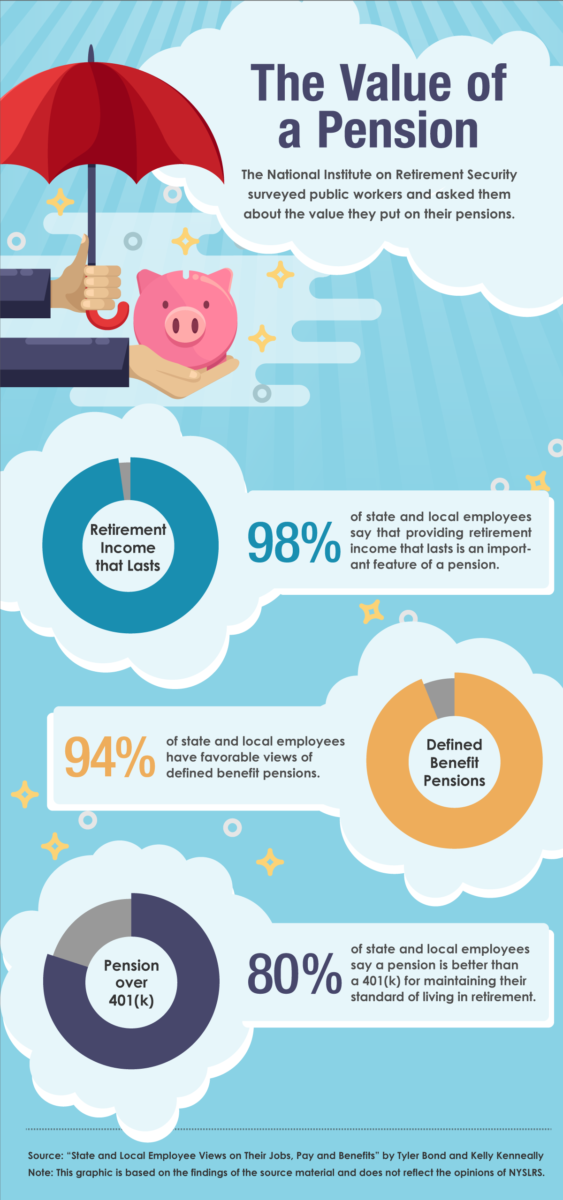
Last year, the National Institute on Retirement Security commissioned a survey of more than 1,100 public sector employees. Teachers, police officers, firefighters and other public workers were asked questions on a variety of work-related subjects, from job satisfaction to health care benefits. The majority of public workers surveyed (86 percent) cited retirement benefits as a major reason they stay in their jobs.

retirement benefits

Defined Benefit vs. Defined Contribution

An overwhelming number (94 percent) of government employees surveyed said pensions help attract and retain workers. The same percentage had a favorable view of defined benefit pension plans.

As a NYSLRS member, you are part of a defined benefit plan, also known as a traditional pension plan. Your pension is a lifetime benefit based on years of service and earnings. It is not based on your individual contributions to the Retirement System.

With defined contributions plans, such as 401(k)-style retirement savings plans, the employer, employee or both make contributions to an individual retirement account. The money in the account is invested, and the amount the employee has at retirement is based on investment returns. A market downturn can affect the value of the benefit and employees risk outliving their money.

When Retirement Benefits Get Reduced

In an effort to cut costs, some state and local governments have replaced defined benefit plans with defined contribution plans. But these moves have had unexpected consequences.

The Institute’s study cites the experience of Palm Beach, Florida, which gutted its defined benefit plan. The town soon realized that it was spending large sums to recruit and train new police officers, only to see them move to nearby communities with better benefits. The town reconsidered and improved its pension plan.

Then there’s the case of West Virginia, where officials found that switching to a defined contribution plan for teachers actually cost more money. Because the traditional pension plan stopped receiving contributions from new teachers and their employers, it became harder for the state to meet its pension obligations. After 14 years, the state went back to offering a defined benefit plan to all new teachers. Teachers already in the 401(k)-style plan were allowed to switch to the traditional plan, and 79 percent made the switch. State officials project that the return to a defined benefit system will save them $1.2 billion in the first 30 years.

Meanwhile, Alaska is still struggling with its decision to drop its defined benefit plan. A report by the Alaska Department of Public Safety cited “the inability to provide a defined benefits retirement system” as a factor in the “critically low staffing levels” for Alaska state troopers.

Too Much Free Time?

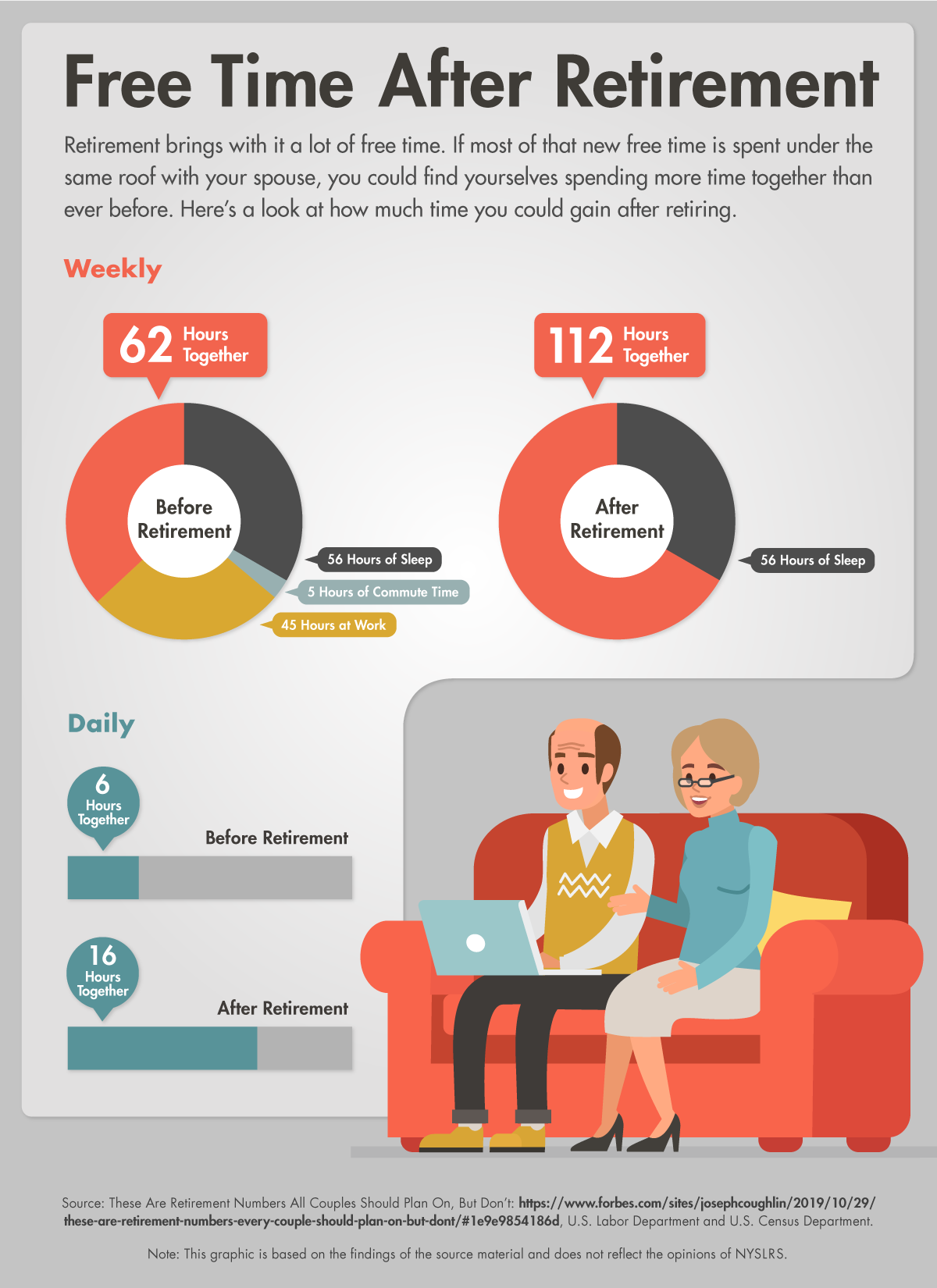
Could retirement bring you too much free time? When people think about retirement planning, they usually think about money. Will you have enough to maintain a comfortable lifestyle for a retirement that could last decades? But regardless of your finances, there is one thing you’re likely to have a lot more of after you retire: time. Figuring out how you’ll spend that time should also be part of your retirement planning process.

Free time after retirement

Counting the Hours

According to the U.S. Labor Department, the average American worker spends about nine hours a day at work. Add another hour a day commuting time, and that’s ten hours a day or 50 hours each week.

All those hours you spent working, and traveling to and from work, will instantly become free time. While that may sound great to many people, all that extra time can have downsides.

If not put to good use, that extra time can lead to boredom and even depression. What’s more, if you’re married and you and your spouse are both retired, you may find yourselves wondering how to spend that time together.

Make a Plan for Free Time

For many couples, having extra time together is a dream come true. However, some couples find themselves getting in each other’s way, and that can sometimes lead to problems.

But there are ways to cope. For example, finding activities outside the home, both together and separately, can help. As with most things, you’ll be better off if you recognize there may be a problem, discuss it with your spouse, and come up with a plan.

There are more thoughts on the subject, and some good advice, in this article: 10 Tips to Help Your Marriage Survive Retirement.

Planning for an Unplanned Retirement

Retirement comes too soon for some people. Poor health, an injury, family situations, layoffs and other unforeseen circumstances could force you into an unplanned retirement.

unplanned retirement

You may already have a plan based on the date you would like to retire, but do you have a backup plan if that date comes a few years earlier than expected?

Know Your Benefits

As a NYSLRS member, you’re entitled to benefits that may help. Most vested members can begin collecting a lifetime pension as early as age 55, though your benefit may be permanently reduced if you retire before full retirement age. (Full retirement age for NYSLRS members is either 62 or 63, depending on your tier. Full retirement age for Social Security benefits depends on your year of birth.)

If you can no longer do your job because of a physical and mental condition, you may be eligible for a Social Security Disability, or a NYSLRS disability benefit if your disability is permanent.

You may also want to look into Workers’ Compensation if you are injured on the job or Unemployment Insurance if you have been laid off from a position.

Other Ways to Plan for the Unexpected

Doing your homework is important. The more you understand the potential benefits available to you, the better you can estimate your income if you are forced to retire early. Unfortunately, the numbers you come up with may not be enough when dealing with an unplanned retirement.

But one potential source of income can make a big difference: retirement savings. Your savings could help you get by until you are eligible to collect your NYSLRS pension or another retirement benefit. If you are not saving for retirement, consider starting now. And if you are saving, consider increasing your savings. It could become a lifeline if the unexpected happens.

New York State employees and some municipal employees can also save for retirement through the New York State Deferred Compensation Plan. Ask your employer if you are eligible.

For more information about the benefits offered by your NYSLRS retirement plan, visit our website to read your plan publication.

NYSLRS’ Special Retirement Plans

NYSLRSCertain PFRS and ERS members are under Special Retirement Plans manages more than 300 retirement plan combinations for its members, which are described in more than 50 plan booklets. But, for all that complexity, they breakdown into just two main types: regular plans and special plans. Under a regular plan, you need to reach certain age and service requirements to receive a pension. For instance, if you’re a Tier 4 member in the Employees’ Retirement System (ERS) with a regular plan, you’re eligible for a benefit when you turn 55 and have five or more years of service credit. Most of our ERS members are in regular plans.


Special plans are a little different. With special plans, NYSLRS members can receive a pension after completing 20 or 25 years of service. There is no age requirement; you can retire at any age once you have the full amount of required service credit. Both ERS and the Police and Fire Retirement System (PFRS) have special plans.

Special Plans for Special Services to the State

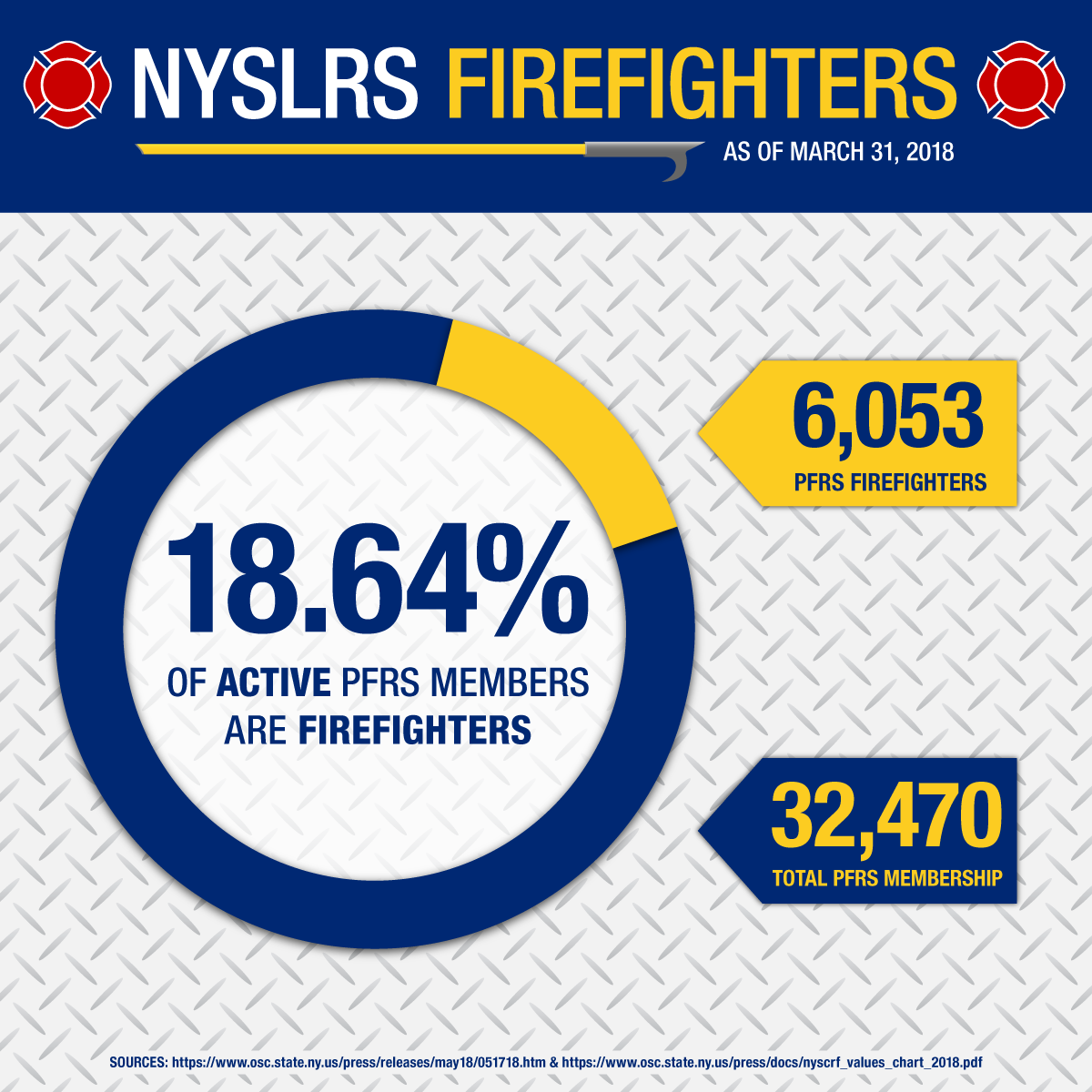
As of March 31, 2018, seven percent of active ERS members and 98 percent of active PFRS members are in special plans. These members fill roles such as:

  • Police officer;
  • Firefighter;
  • Correction officer;
  • Sheriffs undersheriff, and deputy sheriff; and
  • Security hospital treatment assistant.

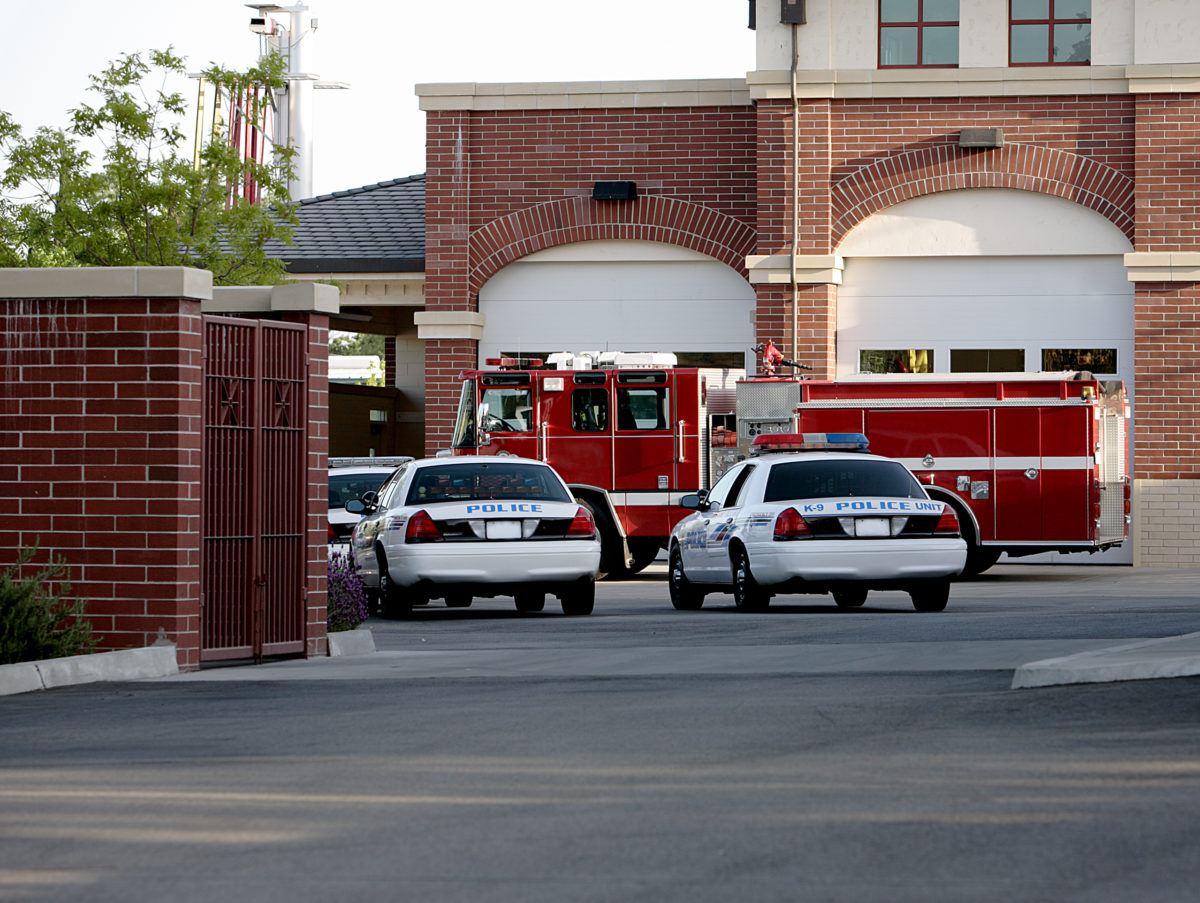
Public employees in jobs like these face dangers and difficulties throughout their careers. They fight fires, patrol our neighborhoods, assist ill patients and more. We’d like to take this opportunity to thank them for the challenging, sometimes life-threatening work they do each day.

If you’d like to learn more about your retirement plan, please visit the Publications page of our website and review your plan publication. If you’re not sure which booklet covers your benefits, you can check your Member Annual Statement, ask your employer or send us an email using our secure contact form.