Tag Archives: PFRS

Tier 3 & 4 Members: When Is The Right Time To Retire?

Tier 3 and 4 members in the Article 15 retirement plan qualify for retirement benefits after they’ve earned five years of credited service. Once you’re vested, you have a right to a NYSLRS retirement benefit — even if you leave public employment. Though your pension is guaranteed, the amount of your pension depends on several factors, including when you retire. Here is some information that can help you determine the right time to retire.

Three Reasons to Keep Working

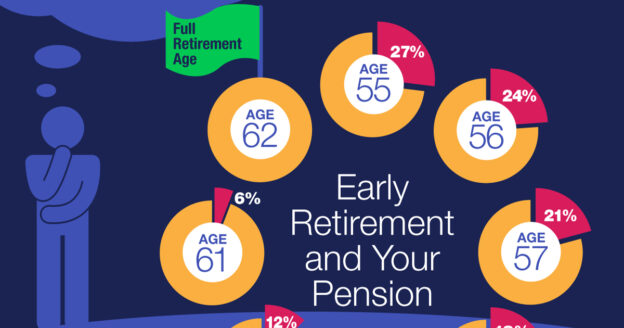
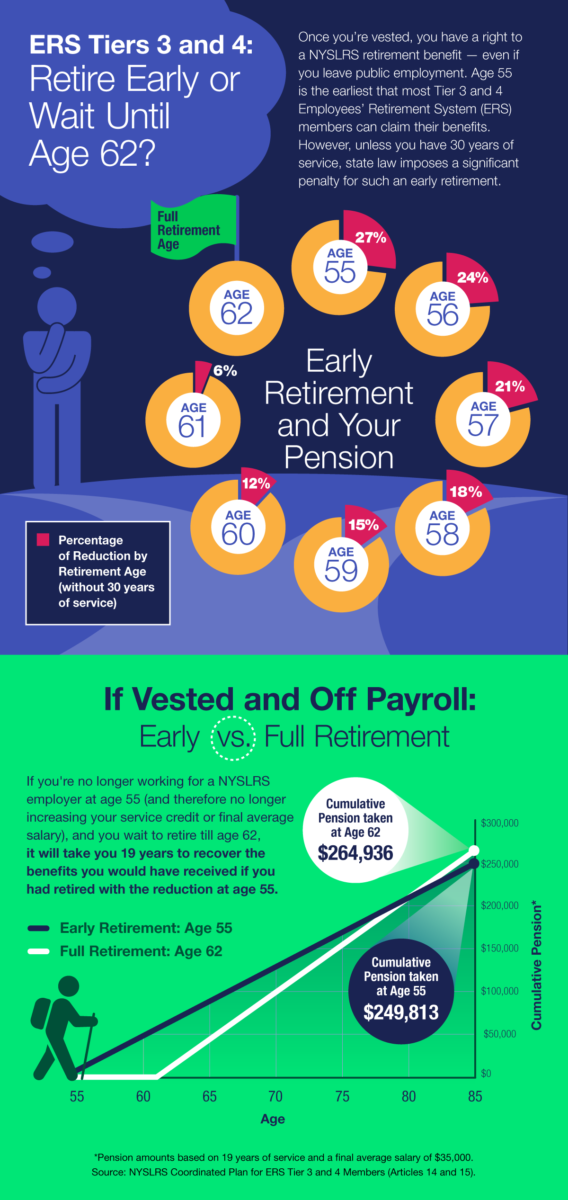
  1. Tier 3 and 4 members can claim their benefits as early as age 55, but they’ll face a significant penalty for early retirement – up to a 27 percent reduction in their pension. Early retirement reductions are prorated by month, so the penalty is reduced as you get closer to full retirement age. At 62, you can retire with full benefits. (Tier 3 and 4 Employees’ Retirement System (ERS) members who are in the Article 15 retirement plan and can retire between the ages of 55 and 62 without penalty once they have 30 years of service credit.)
  2. Your final average earnings (FAE) are a significant factor in the calculation of your pension benefit. Since working longer usually means a higher FAE, continued public employment can increase your pension.
  3. The other part of your retirement calculation is your service credit. More service credit can earn you a larger pension benefit, and, after 20 years, it also gets you a better pension formula. For Tier 3 and 4 members, if you retire with less than 20 years of service, the formula is FAE × 1.66% × years of service. Between 20 and 30 years, the formula becomes FAE × 2.00% × years of service. After 30 years of service, your pension benefit continues to increase at a rate of 1.5 percent of FAE for each year of service.
When is the Right Time to Retire infographic


If You’re Not Working, Here’s Something to Consider

Everyone’s situation is unique. For example, if you’re vested and no longer work for a public employer, and you don’t think you will again, taking your pension at 55 might make sense. When you do the math, full benefits at age 62 will take 19 years to match the money you’d have received retiring at age 55 — even with the reduction.

An Online Tool to Help You Make Your Decision

Most members can use Retirement Online to estimate their pensions.

A Retirement Online estimate is based on the most up-to-date information we have on file for you. You can enter different retirement dates to see how those choices would affect your benefit, which could help you determine the right time to retire. When you’re done, you can print your pension estimate or save it for future reference.

If you are unable to use our online pension calculator, please contact us to request a pension estimate.

This post has focused on Tier 3 and 4 members. To see how retirement age affects members in other tiers, visit our About Benefit Reductions page.
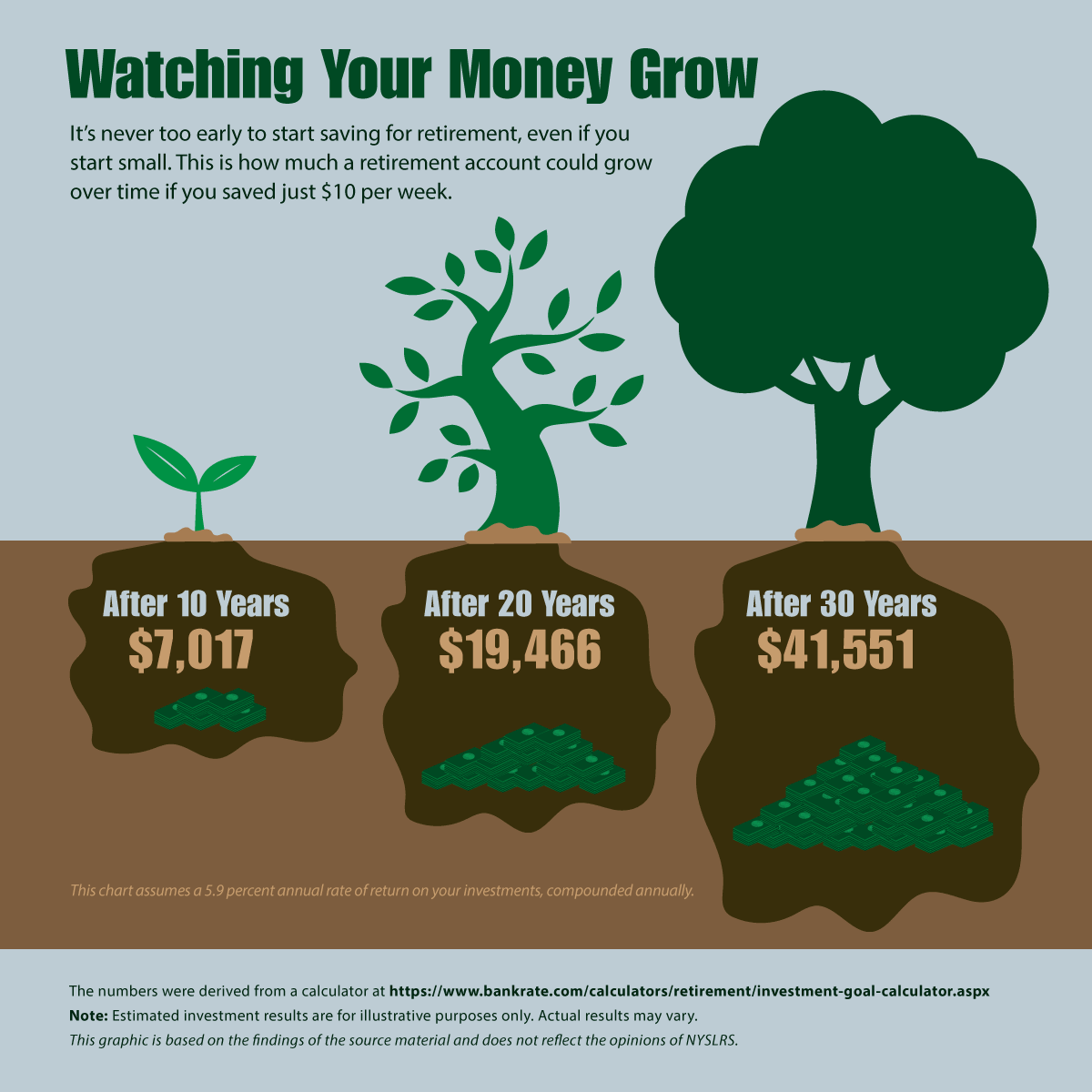
The Right Time to Start Saving for Retirement is Now

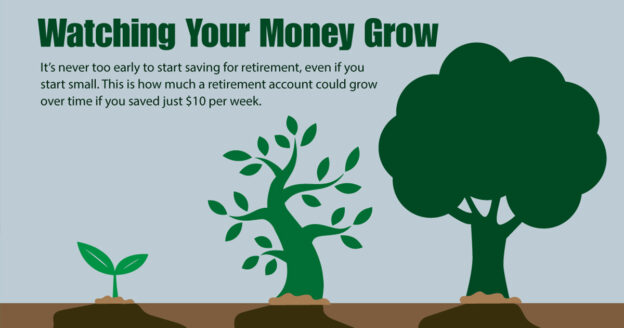
When should you start saving for retirement? If you aren’t saving already, right now is the best time to start. If your retirement is a long way off, that means you’ll have more time for your savings to grow. But even if you’re close to retirement, it is never too late to start saving.

Why Save for Retirement?

While retirees tend to spend less than they did while they were working, financial experts say you’ll still need 70 to 80 percent of your pre-retirement income to maintain your lifestyle during retirement.

NYSLRS members have the rare advantage of a well-funded, defined-benefit pension. As a NYSLRS member, once you’re vested, you’re entitled to a pension that, once you retire, will provide you with monthly payments for the rest of your life. Retirement savings can supplement your NYSLRS pension and Social Security, helping you reach that income-replacement goal.

Retirement savings can also be a hedge against inflation and a source of cash in an emergency. A healthy retirement account will give you more flexibility during retirement, helping ensure that you’ll be able to do the things you want to do. It can also provide peace of mind.

Saving for Retirement

Getting Started

For New York State employees and many other NYSLRS members, there’s an easy way to get started. If you work for a participating employer, you can join the New York State Deferred Compensation Plan. If you don’t work for New York State, check with your employer to see if you are eligible. If you are not eligible, your employer may be able to direct you to an alternative retirement savings program.

Once you sign up for Deferred Compensation, your contributions will automatically be deducted from your paycheck and deposited into your account. You can choose from a variety of investment packages or choose your own investment strategy. (The Deferred Compensation Plan is not affiliated with NYSLRS.)

Dual Membership in NYSLRS

The New York State and Local Retirement System (NYSLRS) consists of two retirement systems: the Employees’ Retirement System (ERS) and the Police and Fire Retirement System (PFRS). Your job title determines what system you’re in. In some cases, however, it’s possible to have a dual membership, to be a member of both systems.

How Does Dual Membership Work?

dual membership in NYSLRSLet’s say you work as a firefighter, so you’re a member of PFRS. You decide to take on a part-time job as a bus driver for your local school district. Your school district participates in ERS, so you’re eligible for ERS membership. You fill out the membership application, and now you’re a member of both ERS and PFRS. The date you join each system determines your tier in each membership.

Implications of Dual Membership

As a member of both systems, you’d have separate membership accounts. Let’s look again at our fire-fighting bus driver example. While working as a firefighter, you make any required contributions and earn service credit toward your PFRS pension only. The same is true for your work as a bus driver—your required contributions and earned service credit only go toward your ERS pension, not your PFRS pension.

There are other implications to dual membership. Assuming you’re vested in both memberships and meet the service credit and age requirements, you could retire and collect a pension from both systems. You’d need to file separate retirement applications for ERS and PFRS, and we’d calculate each pension separately. We’d calculate your ERS pension using the final average earnings (FAE) you earned as a bus driver and your PFRS pension using the FAE from your time as a firefighter.

And, since you’d have both an ERS pension and a PFRS pension, you would need to choose a beneficiary for each in the event of your death.

Questions?

You’ll want to make sure to know the details of your retirement plan in each system. If you have questions about dual membership, or want to discuss your particular situation when you decide to retire, please contact us.

Protecting Your Identity Online: Tips for Secure Passwords

Secure Passwords

The rules for password creation have changed in recent years, so you may have to unlearn some of the things you’ve been taught in the past about secure passwords.

The National Institute of Standards and Technology (NIST), the federal agency that created the original password guidelines, recently revised those guidelines. Its current recommendations are based on research on both the habits of users and the techniques of hackers. Here are some of their findings:

  • Length is a major factor in a password’s strength, so the longer the password, the better.
  • Complex passwords, with a mix of character types, are hard for people to remember, and do little to deter hackers.
  • Strong passwords can be created from short phrases that are easy for you to remember, but would be meaningless to anyone else.
  • Passwords may be used indefinitely as long as they’re strong and have not been compromised. Obviously, if you have an account with a company that just had a data breach, you’ll want to change that password.

Other Ideas on Secure Passwords

Changing passwords every 30, 60 or 90 days was recommended for thwarting hackers, but some security experts now question that tactic. Changing passwords on a regular schedule may have little security value and can lead to bad habits. Research has shown that people tend to make only minor changes when updating their passwords or create weak passwords that are easier for them to memorize. You’re better off creating a strong password, memorizing it and holding on to it.

While NIST has changed some of its guidelines, some of the old ones still apply. Don’t share your secure passwords with anyone, or leave them on sticky notes by your computer. Create unique passwords for important accounts, such as your bank account and your email, and avoid bad passwords such as “password,” “12345678,” “qwerty” and “iloveyou.”

Planning for an Unplanned Retirement

Retirement comes too soon for some people. Poor health, an injury, family situations, layoffs and other unforeseen circumstances could force you into an unplanned retirement.

unplanned retirement

You may already have a plan based on the date you would like to retire, but do you have a backup plan if that date comes a few years earlier than expected?

Know Your Benefits

As a NYSLRS member, you’re entitled to benefits that may help. Most vested members can begin collecting a lifetime pension as early as age 55, though your benefit may be permanently reduced if you retire before full retirement age. (Full retirement age for NYSLRS members is either 62 or 63, depending on your tier. Full retirement age for Social Security benefits depends on your year of birth.)

If you can no longer do your job because of a physical and mental condition, you may be eligible for a Social Security Disability, or a NYSLRS disability benefit if your disability is permanent.

You may also want to look into Workers’ Compensation if you are injured on the job or Unemployment Insurance if you have been laid off from a position.

Other Ways to Plan for the Unexpected

Doing your homework is important. The more you understand the potential benefits available to you, the better you can estimate your income if you are forced to retire early. Unfortunately, the numbers you come up with may not be enough when dealing with an unplanned retirement.

But one potential source of income can make a big difference: retirement savings. Your savings could help you get by until you are eligible to collect your NYSLRS pension or another retirement benefit. If you are not saving for retirement, consider starting now. And if you are saving, consider increasing your savings. It could become a lifeline if the unexpected happens.

New York State employees and some municipal employees can also save for retirement through the New York State Deferred Compensation Plan. Ask your employer if you are eligible.

For more information about the benefits offered by your NYSLRS retirement plan, visit our website to read your plan publication.

NYSLRS’ Special Retirement Plans

NYSLRSCertain PFRS and ERS members are under Special Retirement Plans manages more than 300 retirement plan combinations for its members, which are described in more than 50 plan booklets. But, for all that complexity, they breakdown into just two main types: regular plans and special plans. Under a regular plan, you need to reach certain age and service requirements to receive a pension. For instance, if you’re a Tier 4 member in the Employees’ Retirement System (ERS) with a regular plan, you’re eligible for a benefit when you turn 55 and have five or more years of service credit. Most of our ERS members are in regular plans.
Special plans are a little different. With special plans, NYSLRS members can receive a pension after completing 20 or 25 years of service. There is no age requirement; you can retire at any age once you have the full amount of required service credit. Both ERS and the Police and Fire Retirement System (PFRS) have special plans.

Special Plans for Special Services to the State

As of March 31, 2018, seven percent of active ERS members and 98 percent of active PFRS members are in special plans. These members fill roles such as:

  • Police officer;
  • Firefighter;
  • Correction officer;
  • Sheriffs undersheriff, and deputy sheriff; and
  • Security hospital treatment assistant.

Public employees in jobs like these face dangers and difficulties throughout their careers. They fight fires, patrol our neighborhoods, assist ill patients and more. We’d like to take this opportunity to thank them for the challenging, sometimes life-threatening work they do each day.

If you’d like to learn more about your retirement plan, please visit the Publications page of our website and review your plan publication. If you’re not sure which booklet covers your benefits, you can check your Member Annual Statement, ask your employer or send us an email using our secure contact form.

Firefighters Deserve A Salute Every Day

Recognizing Firefighters

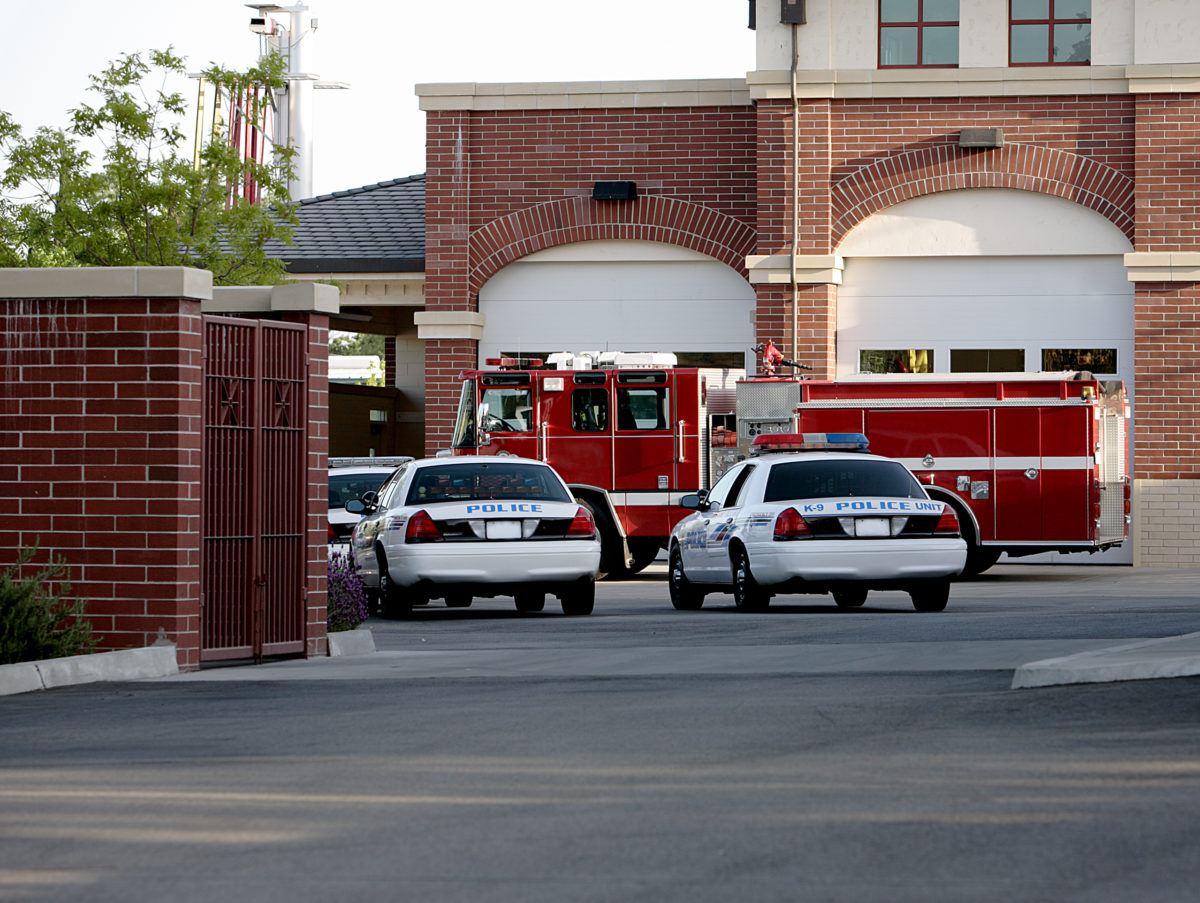
It’s National Fire Prevention Week this week and, while attention is properly focused on promoting fire prevention, we also think it’s a great time to recognize all the firefighters who are members of the New York State and Local Retirement System (NYSLRS).

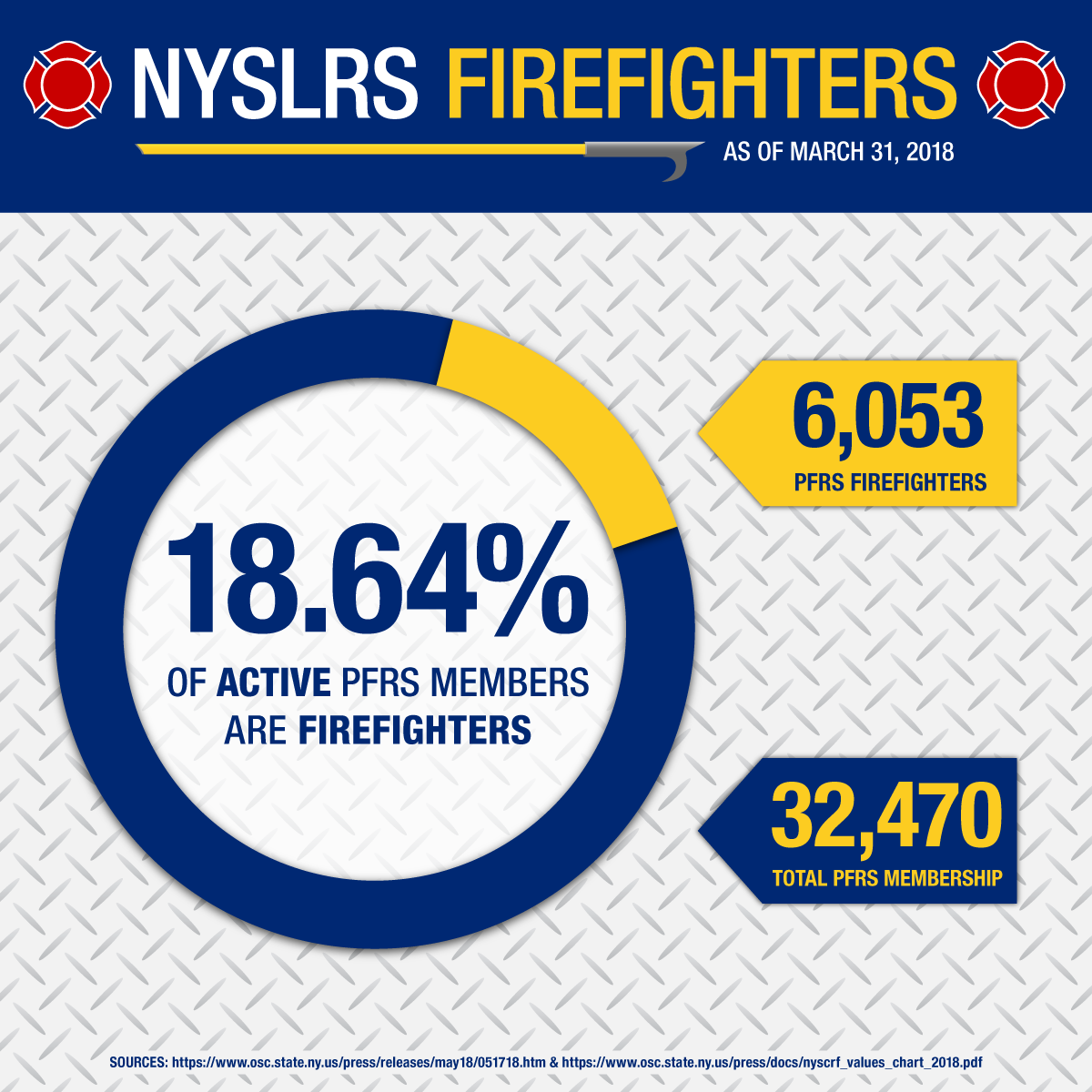
Of the 533,415 members in NYSLRS, 32,470 are in the Police and Fire Retirement System (PFRS). More than 6,000 of these brave men and women are firefighters.

NYSLRS Firefighters data

NYSLRS Membership and Firefighters

All firefighters working for participating employers are PFRS members. With that membership comes a variety of benefits, including certain death and disability benefits as well as a pension. As firefighters and other PFRS members progress through their careers they become eligible for these benefits. For example, from day one, PFRS members are covered by job-related death and disability benefits. However, with ten years of service credit, most members are also eligible for a non-job-related disability benefit.

In addition, most PFRS employers offer their employees special retirement plans. A special plan lets members retire after completing 20 or 25 years of credited service in specific job titles rather than reaching a certain age. Most firefighters — and, in fact, nearly 80 percent of all PFRS members (25,784) — are enrolled in a set of special 20- and 25-year plans. Whether members need 20 or 25 years depends on their retirement plan.

Firefighters are Heroes

To the members of the New York State Professional Fire Fighters Association, the Firemen’s Association of the State of New York and the New York State Association of Fire Chiefs; to the county fire marshals, supervising fire marshals, fire marshals, assistant fire marshals, assistant chief fire marshals and chief fire marshals: Thank you for your service to New York and its citizens. We are grateful for the valuable service you provide all of us.

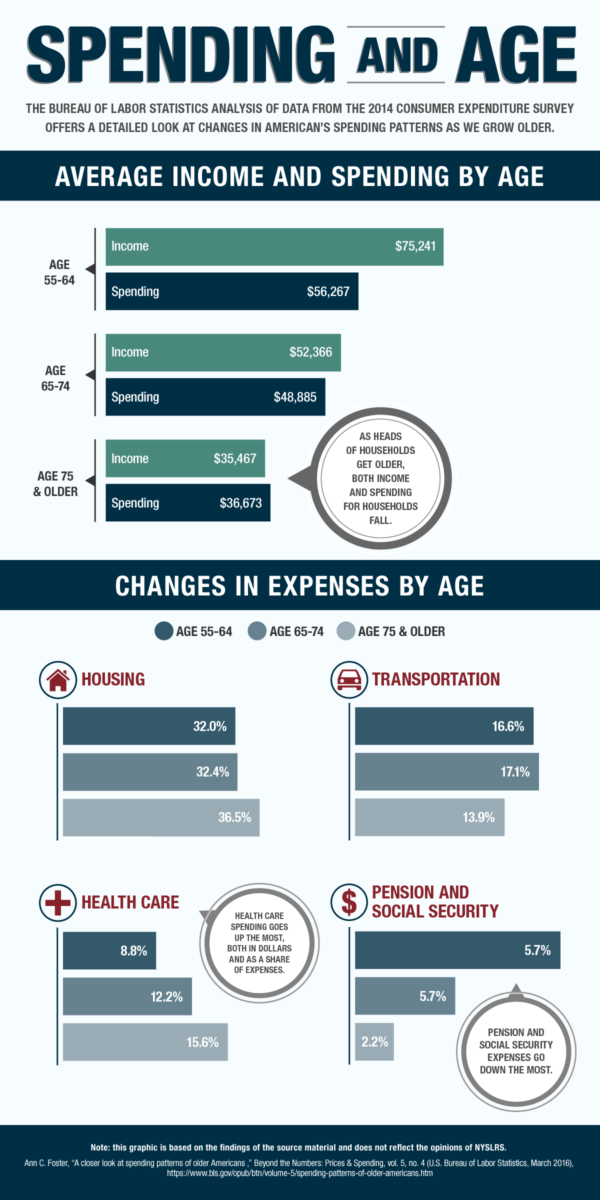
Infographic regarding spending habits

Spending Changes in Retirement

Just like starting your first job, getting married or having kids, retirement will change your life. Some changes are small, like sleeping in or shopping during regular business hours. Others, however, are significant and worth examining ahead of time… like how much you’ll be spending in retirement each month or each year.

An Employee Benefit Research Institute (EBRI) study offers some good news for prospective retirees. Household spending generally drops at the beginning of retirement — by 5.5 percent in the first two years, and by 12.5 percent in the third and fourth years. (Although, nearly 46 percent of households actually spend more in the first two years of retirement.)

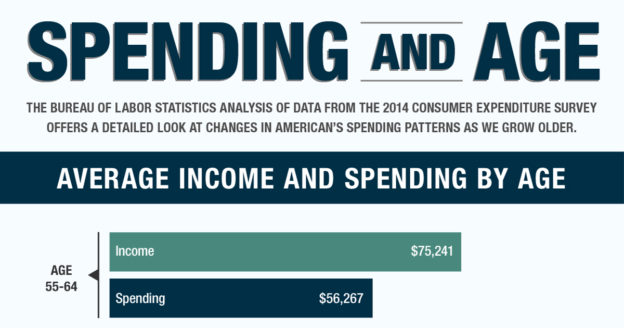
Analysis from the Bureau of Labor Statistics in the U.S. Department of Labor seems to support the research from EBRI. In “A closer look at spending patterns of older Americans,” the author analyzed data from the 2014 Consumer Expenditure Survey, and she also found a progressive drop in spending as age increases. (Income declines with age as well.)

While data supporting EBRI’s study is helpful, it turns out that the highlight of the Consumer Expenditure Survey results is a detailed look at how the things we spend our money on change as we grow older.

Infographic regarding spending habits

As interesting as that is, it’s just a general look at how older Americans are managing their money. What really matters is: How will you spend your money once you retire?

Prepare a Post-Retirement Budget

Like a fiduciary choir, financial advisors all sing the same refrain: Start young; save and invest regularly to meet your financial goals. If you do, the switch from saving to spending in retirement can be easy.

But, in order to make that transition, you need a budget.

The first step toward a post-retirement budget is a review of what you spend now. For a few months, track how you spend your money. Don’t forget to include periodic costs, like car insurance payments or property taxes. By looking at your current spending patterns, you can get an idea of how you’ll spend money come retirement.

Then, consider your current monthly income, and estimate your post-retirement income. If your post-retirement income is less than your current income, you might want to plan to adjust your expenses or even consider changing your retirement date.

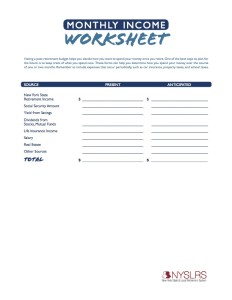
We have monthly expense and income worksheets to help with this exercise. You can print them out and start planning ahead for post-retirement spending.

Monthly budgeting worksheets (PDF)

Monthly Worksheets (PDF)

For those of you who carry smart phones, Forbes put together a list of popular apps for tracking your daily spending. All of them are free, though some do sell extra features. Many of them can automatically pull in information from your bank and credit card accounts, but if you’d rather avoid that exposure or if you use cash regularly, you may prefer an app that lets users enter transactions manually.

Creditable Service for Police & Fire Members

The New York State and Local Police and Fire Retirement System (PFRS) provides service and disability retirement benefits, as well as death benefits to more than 35,000 police officers and firefighters.

Most PFRS members are covered by a plan that allows for retirement after 20 or 25 years, regardless of age, without penalty. As a member, you earn credit toward that requirement through paid public employment with participating employers. However, not all public service counts toward your 20 or 25 years.

What Credit Counts Towards Retirement?

The public service that can be used toward your 20 or 25 years is determined by the specific retirement plan under which you’re covered. Check your retirement plan booklet for details.

There are booklets for state police , forest rangers , regional state park police , state university police , EnCon police and members covered under Sections 384, 384-d and 384-e of Retirement and Social Security Law (RSSL). More plan booklets are available on our Publications page.

The most common PFRS plan, which covers nearly 50 percent of PFRS members, was established by Section 384-e of RSSL. With this plan, you earn creditable service:

  • As a firefighter or police officer under the 384-e plan;
  • As a member or officer of the New York State Police; or
  • In the military, as specified by law.

In the 384-e retirement plan, civilian service, as well as service as a sheriff, corrections officer or volunteer firefighter, is not creditable.

creditable service for police and fire retirement system members

Transferring Membership or Purchasing Service Credit — Contact Us First

If you have worked for multiple New York State public employers and are unsure if all of your service is creditable towards your 20 or 25 year plan, contact us before transferring membership or purchasing service credit . Please note: the public service that can be used toward your 20 or 25 years is determined by legislation and differs among plans offered to PFRS members. You should also be sure to request an estimate from us well before your planned date of retirement if there is any question about your creditable service.

Get an Estimate

PFRS members should request an estimate from us as early as 18 months before you plan to retire. It’s the best way to make sure you have all the credit you’re entitled to. Simply fill out and return a Request for Estimate (RS6030) form.

More Than One Million Strong: The Growth of NYSLRS

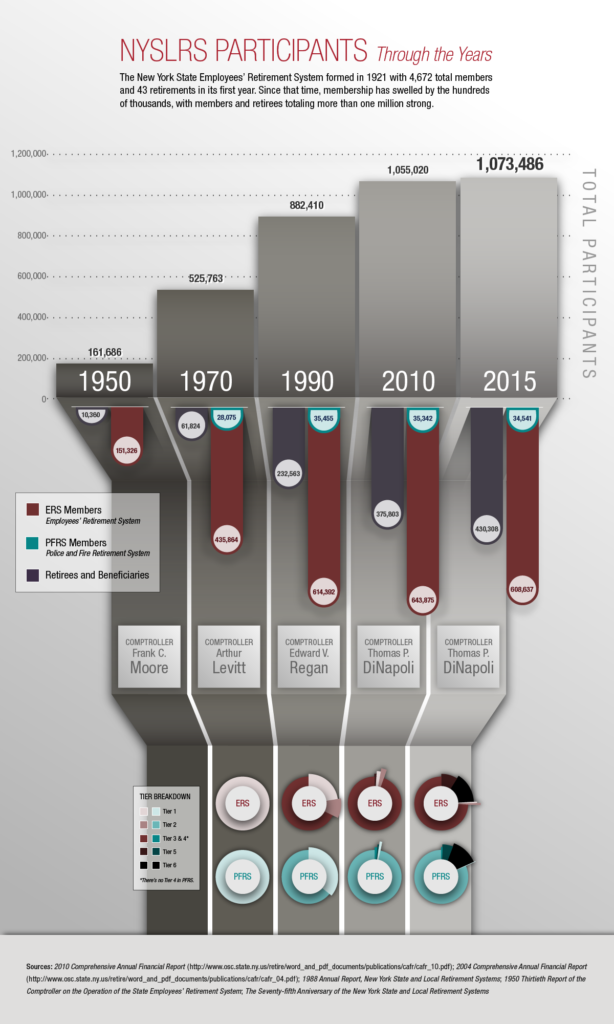
When NYSLRS formed in 1921, it started with a total of 4,721 participants (4,672 members and 43 retirees). Today, NYSLRS provides retirement security to 643,178 members and 430,308 retirees and beneficiaries (the most recent data available).

To say we’ve grown would be an understatement. But no matter how large we get, NYSLRS will continue to provide its members and retirees with lifetime retirement benefits and help them to plan for a financially secure future.

A look back at membership growth through the years.

NYSLRS Membership growth through the years

NYSLRS: Retirement Security Before Social Security

Before NYSLRS began in 1921, many New York public employees who were no longer able to work would fall into poverty. At the time, Social Security didn’t exist to help supplement post-retirement income. While Social Security was created in 1935, it wasn’t made available to public employees until 1950 and didn’t start in New York until 1953.

NYSLRS in 1950

Under State Comptroller Frank C. Moore, NYSLRS was comprised of 161,686 participants in 1950. Of those, 151,326 were Employees’ Retirement System (ERS) members and 10,360 were retirees and beneficiaries.

You may have noticed that there were no Police and Fire Retirement System (PFRS) members in 1950. We had police and fire members – a little more than 12,000, in fact – but they were considered ERS members until 1967. On April 1, 1967, ERS split into the two systems you know today: ERS and PFRS.

NYSLRS in 1970

Participation in NYSLRS grew to 525,763 in 1970. Of these, 463,939 were members and 51,824 were retirees and beneficiaries. The State Comptroller at the time was Arthur Levitt Sr. Comptroller Levitt is known for having the longest tenure as State Comptroller, serving a total of 24 years from 1955 to 1978.

The 1970s also saw the creation of a new member group. Tier 2 began on July 1, 1973. The creation of Tier 2, and the other tiers that followed, were designed to provide members equitable benefits at a reasonable cost.

NYSLRS in 1990

From 1979 to 1993, Edward V. “Ned” Regan served as State Comptroller. During his time in office, participation in NYSLRS continued to climb, growing to 882,410 in 1990. Of these, 649,847 were members and 232,563 were retirees and beneficiaries.

NYSLRS in 2010

Between 2006 and 2007, participation in NYSLRS broke the one-million-participant mark. In 2010, during current Comptroller Thomas P. DiNapoli’s administration, participation rose to 1,055,020. Of these, 679,217 were members and 375,803 were retirees and beneficiaries.

NYSLRS in 2015

In 2015, overall membership in the System reached 1,073,486. This includes 643,178 members and 430,308 retirees and beneficiaries (the most recent data available). The number of retirees is increasing more quickly than members. For example, in 1995, retirees represented 30 percent of the System’s members. By 2015, that number had increased to approximately 40 percent.

What does 2016 hold for NYSLRS? Keep an eye out in future blog posts for the latest NYSLRS demographics.