Tag Archives: benefits

Your NYSLRS Pension—A Defined Benefit Plan

As a NYSLRS member, you are enrolled in a defined benefit plan, also known as a traditional pension plan.

If you are vested and retire from NYSLRS, you will receive a monthly pension payment for the rest of your life. Your pension will be calculated using a preset formula based on your earnings and years of service—it will not be based on the individual contributions you paid into the system.

Member contributions support the benefits earned by current and future retirees and are an important asset of the Common Retirement Fund.

Defined benefit plans are supported by contributions from both members and employers. With defined benefit plans, retirement assets are pooled and the investment risk is shared. These plans are usually administered by professional managers, whose long-term investment strategies help to reduce the impact of market turmoil. NYSLRS employs an experienced group of investment managers.

The New York State Common Retirement Fund, which holds and invests the assets of NYSLRS, is one of the largest public pension plans in the United States, providing retirement security for over 1.2 million NYSLRS members, retirees and beneficiaries. The Fund has consistently been ranked as one of the best managed and best funded plans in the nation.

understand your defined benefit plan

Defined Contribution Plans—And Their Risks

Defined benefit plans are often confused with 401(k)-style retirement savings plans, which are known as defined contribution plans.

With a defined contribution plan, the employee, the employer or both contribute to an individual retirement account for the employee, and the money in the account is invested. In most cases, the employee decides how and where the money is invested (or the plan may offer pre-packaged investment options). At retirement, the employee will be able to draw from the accumulated value of contributions and investment returns, minus any fees.

The amount of money the employee has at retirement often relies on the investment returns of the individual account. So, market downturns, especially near retirement, can negatively affect the value of the benefit. Employees depending on defined contribution plans run the risk of outliving their savings.

NYSLRS’ Defined Benefit Plans

We administer nearly 300 retirement plan combinations. NYSLRS retirement plans:

  • Provide a guaranteed benefit for life.
  • Offer a pension based on final average earnings and years of service.
  • Provide a right to pension benefits (vesting) with five years of service credit.
  • Build a cost-of-living adjustment (COLA) into pensions to help offset the effect of inflation.
  • Include disability retirement and death benefits.

We strongly encourage you to review your retirement plan publication for a complete description of your benefits. Visit our Find Your NYSLRS Retirement Plan Publication page and follow the steps listed.

ERS Tier 3 and 4 Milestones

When you join the Employees’ Retirement System (ERS), you are assigned a tier based on your date of membership. You are in:

  • Tier 3 if you joined July 27, 1976 through August 31, 1983.
  • Tier 4 if you joined September 1, 1983 through December 31, 2009.

Let’s look at the ERS Tier 3 and 4 milestones and how they affect your benefits.

Why Milestones Matter

As a NYSLRS member, you earn service credit for your paid public employment. Generally, one year of full-time work equals one year of service credit. As you earn service credit, you’ll reach career milestones that will make you eligible for certain benefits or for increases to your existing benefits. Understanding these milestones can help you plan for retirement.

Your ERS Tier 3 and 4 milestones and pension calculation depend on your retirement plan, so it is important to familiarize yourself with the details of your plan. Most ERS Tier 3 and 4 members are in the Article 15 retirement plan (named for a section of the New York State Retirement and Social Security Law). If you see Plan A15 listed in the ‘My Account Summary’ section of your Retirement Online account, you’re in this plan. For members not covered by the Article 15 retirement plan, visit our website to Find Your NYSLRS Retirement Plan Publication.

Important ERS Tier 3 and 4 Milestones

ERS Tier 3 and 4 member milestones

Here are some additional important milestones for Tier 3 and 4 members in the Article 15 retirement plan:

  • With ten years of service credit, you can apply for a non-job-related disability benefit if you are permanently disabled and cannot perform your duties because of a physical or mental condition.
  • With ten years of service credit, your beneficiaries may be eligible for an out-of-service death benefit if you leave public employment and die before retirement.
  • Ten years also marks the point when you are no longer able to withdraw your membership and receive a refund of your contributions if you leave public employment.
  • You are eligible to retire once you are age 55 and have five years of service credit. However, for most Tier 3 and 4 members, there would be reductions to your benefit if you retire before age 62 with less than 30 years of service credit.
  • You can retire with full benefits at age 62.
    • If you retire with less than 20 years of service, your pension will equal 1.66 percent of your final average earnings (FAE) for each year of service.
    • If you retire with 20 to 30 years of service, your pension will equal 2 percent of your FAE for each year of service.
    • For each year of service beyond 30 years, you will receive 1.5 percent of your FAE.

Note: When you retire, your FAE will be based on the average of your three highest consecutive years of earnings. The law limits the FAE of all members who joined on or after June 17, 1971. Read our blog post, Calculating Your Final Average Earnings, for more information, including how your FAE will be calculated and limitations.

Most members can estimate their pension in Retirement Online. You can fine tune your estimate by entering your annual earnings and expected pay increases. You can also include any service credit you plan to purchase.

ERS Tier 5 Milestones

If you joined the Employees’ Retirement System (ERS) on or after January 1, 2010, but before April 1, 2012, you are a Tier 5 member. Let’s look at the ERS Tier 5 milestones you will reach over the course of your public service career and how they will affect your benefits.

Why Milestones Matter

As a NYSLRS member, you earn service credit for your paid public employment. Generally, one year of full-time work equals one year of service credit. As you earn service credit, you’ll reach career milestones that will make you eligible for certain benefits or for increases to your existing benefits. Understanding these milestones will help you plan for retirement.

Your ERS Tier 5 milestones and pension calculation depend on your retirement plan, so it is important to familiarize yourself with the details of your plan. Most ERS Tier 5 members are in the Article 15 retirement plan (named for a section of the New York State Retirement and Social Security Law). If you see Plan A15 listed in the ‘My Account Summary’ section of your Retirement Online account, you’re in this plan. For members not covered by the Article 15 retirement plan, visit our website to Find Your NYSLRS Retirement Plan Publication.

Important ERS Tier 5 Milestones

ERS Tier 5 milestones

Here are some additional important milestones for Tier 5 members in the Article 15 retirement plan:

  • With ten years of service credit, you can apply for a non-job-related disability benefit if you are permanently disabled and cannot perform your duties because of a physical or mental condition.
  • With ten years of service credit, your beneficiaries may be eligible for an out-of-service death benefit if you leave public employment and die before retirement.
  • Ten years also marks the point when you are no longer able to withdraw your membership and receive a refund of your contributions if you leave public employment.
  • You are eligible to retire once you are age 55 and have at least five years of service credit. However, for most Tier 5 members, there would be reductions to your benefit if you retire before age 62.
  • You can retire with full benefits at age 62.
    • If you retire with less than 20 years of service, your pension will equal 1.66 percent of your final average earnings (FAE) for each year of service.
    • If you retire with 20 to 30 years of service, your pension will equal 2 percent of your FAE for each year of service.
    • For each year of service beyond 30 years, you will receive 1.5 percent of your FAE.

Note: When you retire, your FAE will be based on the average of your three highest consecutive years of earnings. The law limits the FAE of all members who joined on or after June 17, 1971. Read our blog post, Calculating Your Final Average Earnings, for more information, including how your FAE will be calculated and limitations.

Most members can estimate their pension in Retirement Online. You can fine tune your estimate by entering your annual earnings and expected pay increases. You can also include any service credit you plan to purchase.

ERS Tier 6 Milestones

If you joined the Employees’ Retirement System (ERS) on or after April 1, 2012, you are a Tier 6 member. Let’s look at the ERS Tier 6 milestones you will reach over the course of your public service career and how they will affect your benefits.

Why Milestones Matter

As a NYSLRS member, you earn service credit for your paid public employment. Generally, one year of full-time work equals one year of service credit. As you earn service credit, you’ll reach career milestones that will make you eligible for certain benefits or for increases to your existing benefits. Understanding these milestones will help you plan for retirement.

Your ERS Tier 6 milestones and pension calculation depend on your retirement plan, so it is important to familiarize yourself with the details of your plan. Most ERS Tier 6 members are in the Article 15 retirement plan (named for a section of the New York State Retirement and Social Security Law). If you see Plan A15 listed in the ‘My Account Summary’ section of your Retirement Online account, you’re in this plan. For members not covered by the Article 15 retirement plan, visit our website to Find Your NYSLRS Retirement Plan Publication.

Important ERS Tier 6 Milestones

ERS Tier 6 milestones

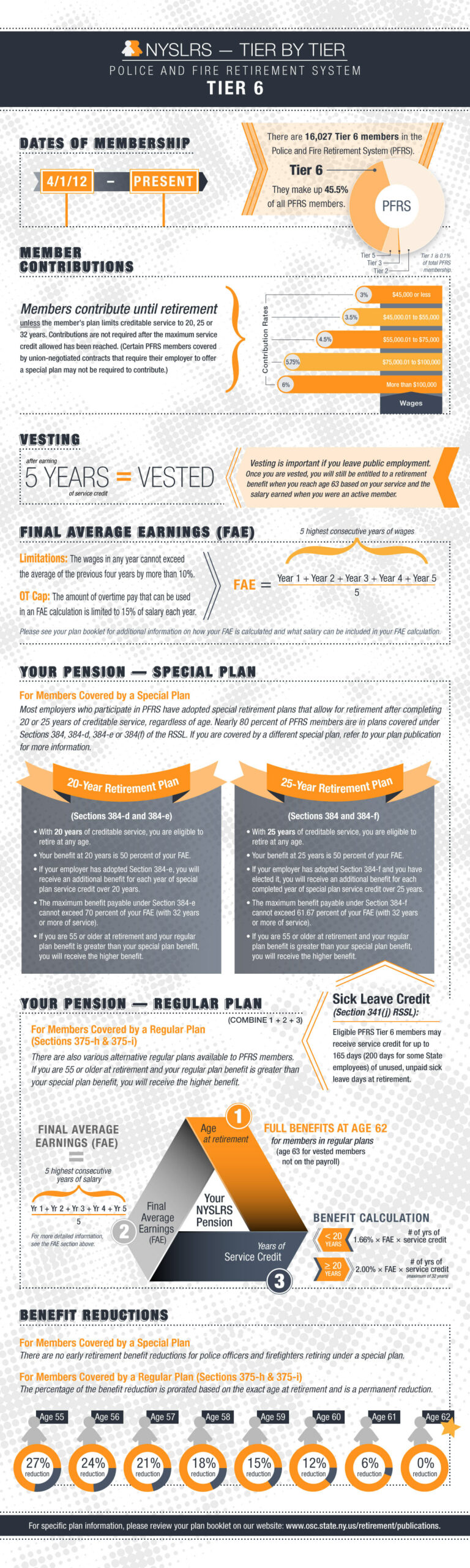
Here are some additional important milestones for Tier 6 members in the Article 15 retirement plan:

  • With ten years of service credit, you can apply for a non-job-related disability benefit if you are permanently disabled and cannot perform your duties because of a physical or mental condition.
  • With ten years of service credit, your beneficiaries may be eligible for an out-of-service death benefit if you leave public employment and die before retirement.
  • Ten years also marks the point when you are no longer able to withdraw your membership and receive a refund of your contributions if you leave public employment.
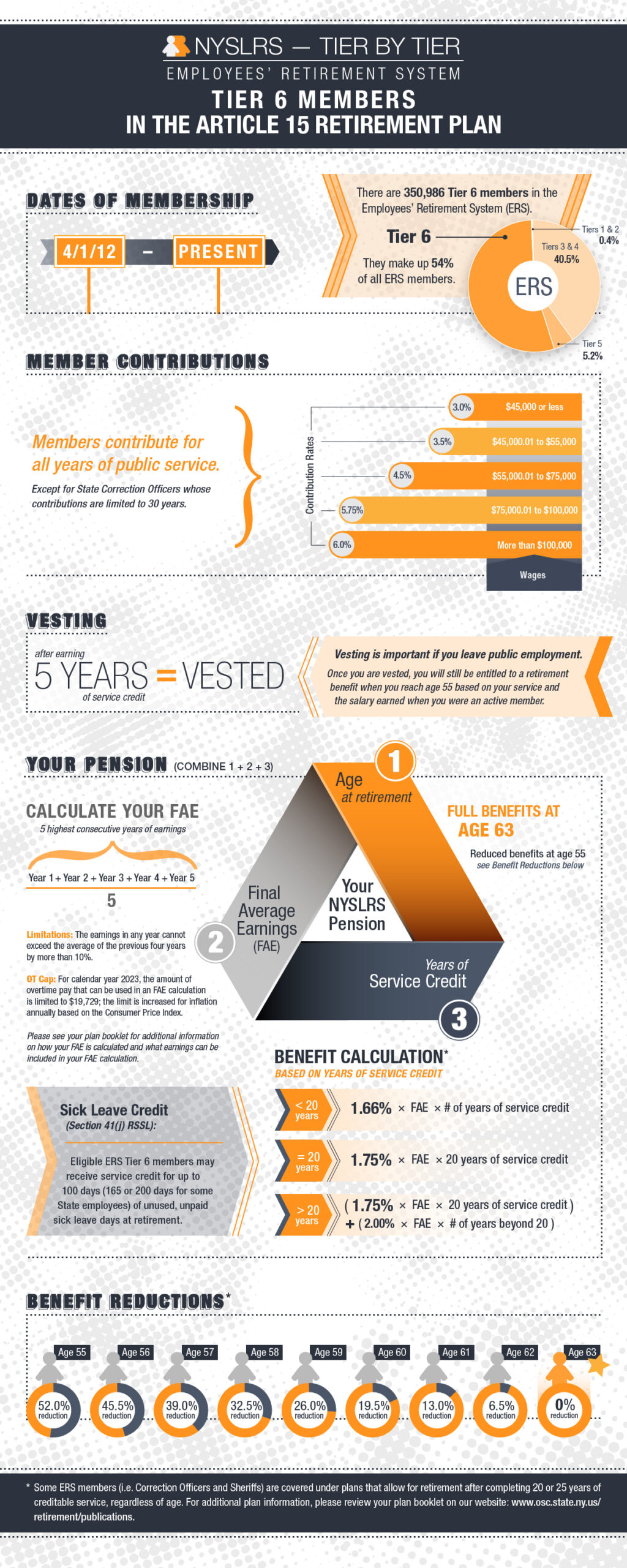
  • You are eligible to retire once you are age 55 and have at least five years of service credit. However, for most Tier 6 members, there would be reductions to your benefit if you retire before age 63.
  • You can retire with full benefits at age 63.
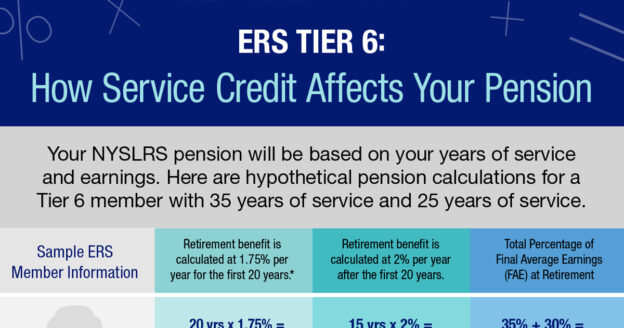
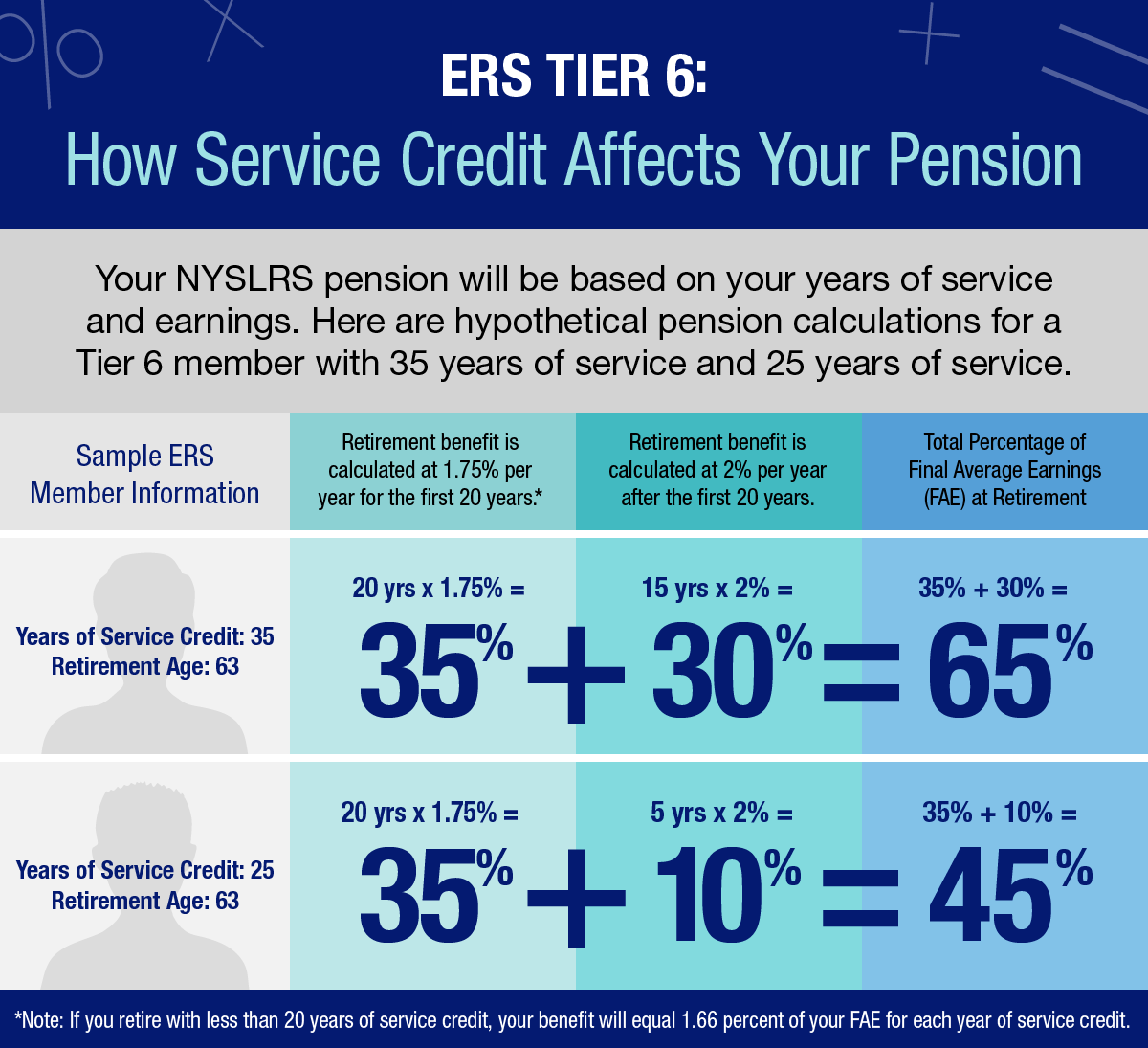
    • If you retire with less than 20 years of service, your pension will equal 1.66 percent of your final average earnings (FAE) for each year of service.
    • If you retire with 20 years of service, your pension will equal 1.75 percent of your FAE for each year of service.
    • For each year of service beyond 20 years, you will receive 2 percent of your FAE.

Note: A new law improves your pension benefits. When you retire, your final average earnings (FAE) will be based on the average of your three highest consecutive years of earnings, the same as members in other tiers. Read our blog post, Calculating Your Final Average Earnings, for more information, including how your FAE will be calculated and limitations.

Most members can estimate their pension in Retirement Online. You can fine tune your estimate by entering your annual earnings and expected pay increases. You can also include any service credit you plan to purchase.

Calculating Your Final Average Earnings

As a NYSLRS member, you have a defined benefit plan that provides a lifetime pension when you retire. Your NYSLRS pension benefit amount will be determined by several factors, including your tier, service credit, and final average earnings (FAE).

When we calculate your pension, we find the consecutive years when your earnings were highest. These are usually your years of employment immediately before retirement, but they can be anytime in your career and do not need to match up with calendar years or fiscal years.

Update: Tier 6 Final Average Earnings Based on Highest Three Years

A new law improves the pension benefits of NYSLRS Tier 6 members. When you retire, your FAE will be based on the average of your three highest consecutive years of earnings, the same as members in other tiers.

These improvements apply to members who retire on or after:

  • April 1, 2024, for Police and Fire Retirement System (PFRS) Tier 6.
  • April 20, 2024, for Employees’ Retirement System (ERS) Tier 6.

Previously, your FAE was the average of your highest five consecutive years of earnings.

If you recently retired and the change applies to you, we have updated your pension calculation — you don’t need to contact us. The new law does not apply to members who retired before the dates above.

Understanding Final Average Earnings Limits

If your earnings increase significantly through the years used in your FAE, some of those earnings may not be used toward your pension.

Your limit depends on whether you’re an ERS or PFRS member and your tier. For most members, if the earnings in any 12-month period in your FAE exceed the average of the previous two years by more than 10 percent, the amount above 10 percent will not be included in your FAE calculation.

Calculating Your Final Average Earnings

For more information, including limits for other tiers, visit our Final Average Earnings page.

Types of Earnings Included in Your FAE

The specific types of earnings included in your FAE calculation depend on your retirement plan and tier. Please check your plan publication for details.

In most cases, your FAE will include the payments listed below, if they are earned in the FAE period. (In some cases, restrictions may apply.)

In most cases, the following payments will not be included in your FAE calculation:

  • Unused sick leave;
  • Payments made as a result of working your vacation;
  • Any form of termination pay;
  • Payments made in anticipation of retirement; and
  • Any payments made for time not worked.

Vested: Qualifying for a Retirement Benefit

Becoming vested is a crucial milestone for NYSLRS members. It means you have earned enough service to qualify for a retirement benefit once you meet the age or service requirements established by your retirement plan. Vesting is automatic — you don’t have to fill out any paperwork to become vested.

Vested: Qualifying for a Retirement Benefit

Years of Service Credit to Become Vested

NYSLRS members in Tiers 2 – 6 need five years of service credit to be vested.  

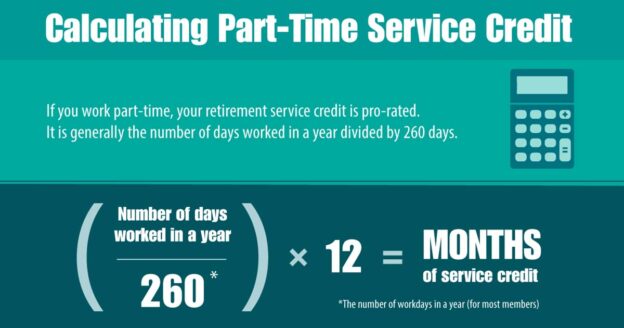
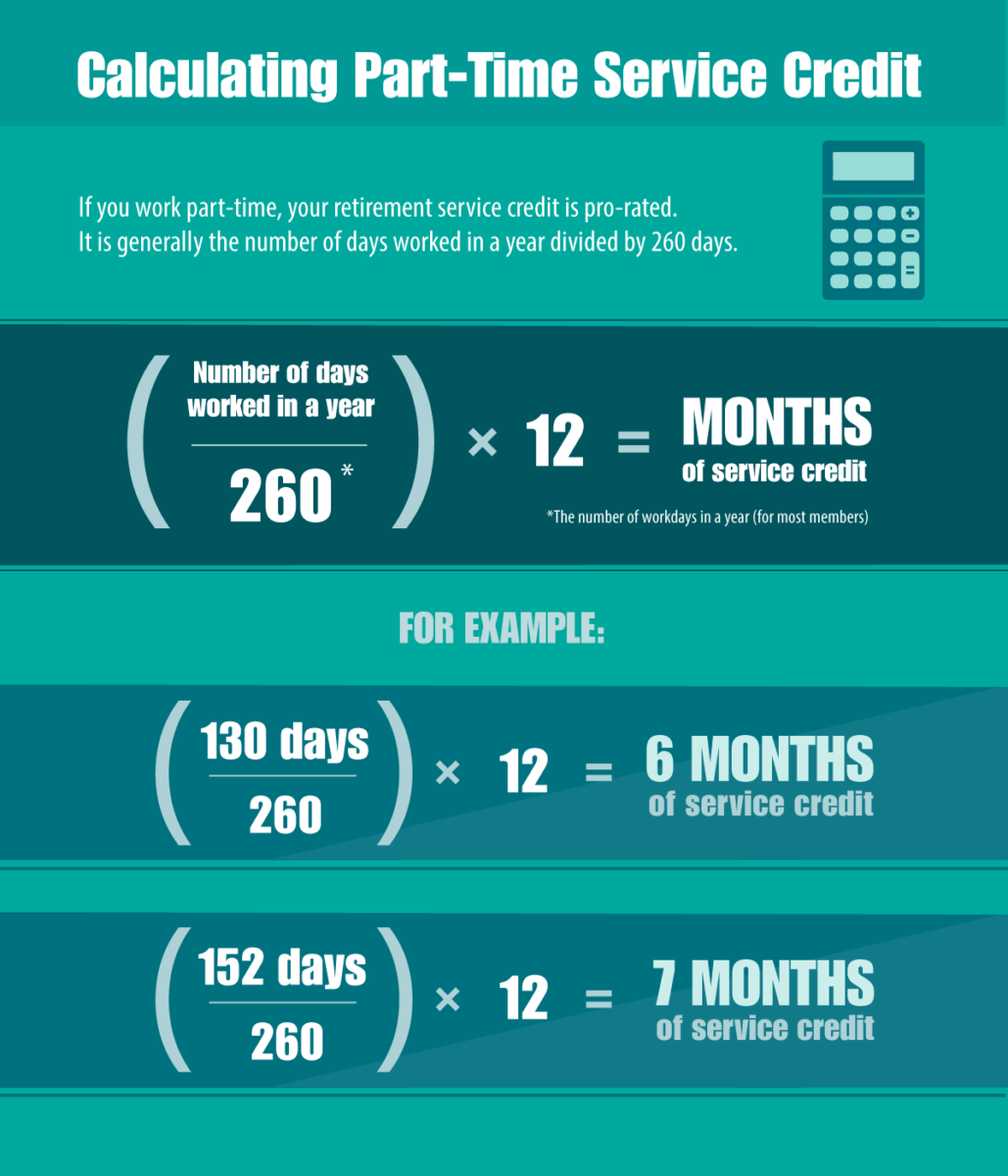
If you work part-time, or if you have an unpaid leave of absence, it will take longer to become vested. For example, if you work half-time, you earn six months of credit toward vesting for each year on the job.

Sign in to your Retirement Online account to check your total estimated service credit and whether you are vested.

If you work for a school district, read our How School Employees Earn NYSLRS Service Credit blog post for information about how your service credit is determined. 

Note: Previously, Tier 5 and 6 members needed ten years of service to be eligible for a service retirement benefit. However, as of April 9, 2022, these members only need five years of service credit to be vested. The new law did not change benefit rules such as how long members must contribute, pension benefit calculations, the full retirement age, reductions to retire early or the cost to purchase previous service.

Applying for Retirement

Vesting is automatic, but you will need to apply for retirement to receive your pension — NYSLRS will not pay out your pension benefit unless you apply for it.

Pension eligibility requirements and benefit calculations depend on your tier and retirement plan. To find your tier and retirement plan, sign in to your Retirement Online account and go to the ‘My Account Summary’ section. Once you know your tier and retirement plan, you can find your retirement plan publication for comprehensive information about your benefits and filing instructions.

And when you’re ready, you can apply for a service retirement benefit quickly and easily using Retirement Online.

If you leave public employment, read about the age requirements for filing for a vested retirement benefit as well as other important information that you should know about your NYSLRS membership and benefits.

NYSLRS – One Tier at a Time: PFRS Tier 2

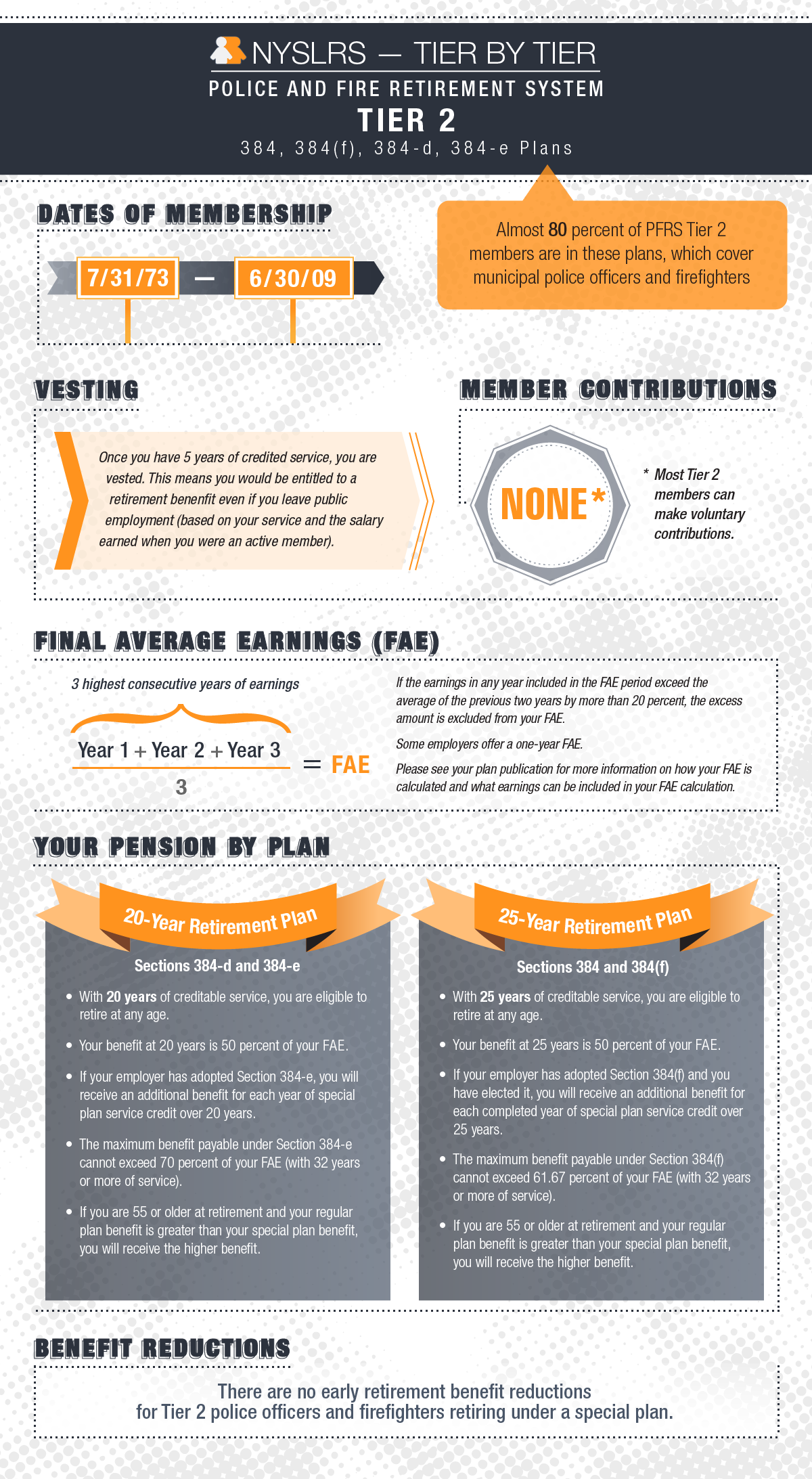
When you join the New York State and Local Retirement System (NYSLRS), you’re assigned a tier based on the date of your membership. This post looks at Tier 2 members of the Police and Fire Retirement System (PFRS).

Your tier determines such things as your eligibility for benefits, the calculation of those benefits, death benefit coverage and whether you need to contribute toward your benefits.

PFRS has five tiers. Almost half of PFRS members are in Tier 2, which began on July 31, 1973, and ended on June 30, 2009. Most are in special retirement plans that allow for retirement after 20 or 25 years, regardless of age, without penalty.

The special plans that cover most police officers and firefighters fall under Sections 384, 384(f), 384-d, and 384-e of Retirement and Social Security Law. You can sign in to Retirement Online to find your benefit plan, which is listed under ‘My Account Summary.’
PFRS Tier 2

Where to Find PFRS Tier 2 Information

Whether you’re in one of the retirement plans described in this post or another retirement plan, we encourage you to visit our website to find your NYSLRS retirement plan publication. It’s a comprehensive description of the benefits you’re entitled to receive as a PFRS member.

You can check your service credit total and estimate your pension using Retirement Online. Most members can use our online pension calculator to create an estimate based on the salary and service information NYSLRS has on file for them. You can enter different retirement dates to see how your choices would affect your potential benefit.

Members may not be able to use the Retirement Online calculator in certain circumstances, for example, if they have recently transferred a membership to NYSLRS, if they are a Tier 6 member with between five and ten years of service, or if they have worked for multiple employers and were covered by different retirement plans. These members can contact us to request an estimate or use the “Quick Calculator” on our website. The Quick Calculator generates estimates based on information you provide.  

Know Your Benefits: Death Benefits

NYSLRS membership provides more than just retirement benefits. For most members, if you die while in active service, your beneficiary may be eligible to receive a death benefit. Here is an overview of member death benefits. If you are retired, visit our Death Benefit page for retirees to learn about your available benefits.

death benefits

Types of Death Benefits

Most members who die while they’re still working will leave their beneficiaries what’s called an “ordinary death benefit.” This is a lump sum payment that’s usually equal to one year of your earnings per year of service, up to a maximum of three years. 

Generally, to leave your beneficiaries this death benefit, you must have at least one year of service credit and your death must occur while you are on the public payroll.

Some members who die because of an on-the-job accident (not due to their own willful negligence) may leave their beneficiary an accidental death benefit. The accidental death benefit is a pension payable to your spouse. Other beneficiaries, as specified by law, may be eligible if there is no spouse.

  • For Employees’ Retirement System (ERS) Tier 4, 5 and 6 members, the benefit would be 50 percent of your earnings from your last year of service.
  • For most other members, the benefit would be 50 percent of your final average earnings (less any workers’ compensation benefit).

There is no minimum service credit requirement to leave an accidental death benefit.

The specific death benefits that may be available to your beneficiaries depend on your tier and retirement plan. Find Your NYSLRS Retirement Plan Publication and check it for specific benefit amount and eligibility information.

Review and Update Your Beneficiaries

You should periodically review your beneficiary designations. Life circumstances sometimes change, and the beneficiary you may have named before might not be the one you would choose today. You should also make sure your beneficiary’s contact information is up to date so we can find them when needed.

Retirement Online is the best way to manage your beneficiary information. Sign in to Retirement Online today and click “View and Update My Beneficiaries” to review your named beneficiaries, and update them if needed.

Reporting a Death

NYSLRS cannot pay out death benefits until after we are notified of a member’s death and have a certified copy of the death certificate. The fastest way for survivors to report a member’s death to NYSLRS is using our online form on our website. Survivors can also upload a copy of the certified death certificate, which enables us to start reaching out to the beneficiary. It’s important to talk with your family about your benefits and how to report your death to NYSLRS.

Payment of Death Benefits

NYSLRS will reach out to your beneficiaries on file and send them the application and instructions for receiving benefits. NYSLRS can pay death benefits once it receives the required documentation.

COLA Increase

Retirees: Annual COLA Increase

A Cost-of-Living Adjustment (COLA) is a permanent annual increase to your pension to help offset the impact of inflation. Eligible NYSLRS retirees will receive a COLA increase beginning with their end-of-September pension payment:

  • Direct deposited on September 30, 2025.
  • Checks mailed on September 29, 2025.

If you are eligible for COLA, you will receive a notice of the change to your net monthly retirement benefit by mail at the end of September. It will show the previous and new monthly amounts for your COLA, your net retirement benefit (the total pension payment amount you receive after credits, deductions and taxes) and any other changes to your credits, deductions or taxes. To determine your monthly COLA increase, subtract the amount listed under ‘Last Month’ from the amount listed under ‘This Month.’

COLA Increase

How COLA is Determined

In accordance with State law, the annual COLA percentage is 50 percent of the rate of inflation at the end of the State fiscal year (March 31), rounded up to the nearest tenth. COLA cannot be less than 1 percent or more than 3 percent annually.

This Year’s COLA Increase

The COLA for September 2025 through August 2026 is 1.2 percent.

The percentage is applied up to the first $18,000 of your annual pension benefit as if you had chosen the Single Life Allowance pension payment option, even if you selected a different option at retirement. Because the Single Life Allowance pays the maximum pension benefit, using this option gives you the highest possible COLA. If your annual pension benefit is $18,000 or more, you will receive the maximum monthly increase of $18 (for a total maximum annual increase of $216) before taxes.

COLA is cumulative, meaning the increase you receive each September is added to your existing monthly COLA amount.

For a breakdown of credits and deductions and to see year-to-date totals throughout the year, you can view your pension pay stub online.

  • Sign in to Retirement Online.
  • Look under I want to… (located at the top right).
  • Click View Pension Check link.
  • Select date of the pension payment to view.

Eligibility

To begin receiving COLA, you must be:

  • Age 62 or older and receiving a service retirement benefit for five or more years; or
  • Age 55 or older and receiving a service retirement benefit for ten or more years (applies to uniformed employees such as police officers, firefighters and correction officers who are covered by a special retirement plan that allows for retirement, regardless of age, after 20 or 25 years); or
  • Receiving a disability retirement benefit for five or more years; or
  • The spouse of a deceased retiree receiving a lifetime benefit under an option elected by the retiree at retirement (you’ll receive half the retiree’s COLA amount); or
  • A beneficiary receiving the accidental death benefit for five or more years on behalf of a deceased Employees’ Retirement System (ERS) member.

Once you’re eligible, you will automatically receive a COLA increase in your monthly pension payment beginning each September.

For More Information

For more information, including an example of how COLA is applied and information about receiving your first COLA, visit our Cost-of-Living Adjustment (COLA) page.

For more upcoming pension payment dates, check our pension payment calendar.

NYSLRS – One Tier at a Time: ERS Tier 5

When you joined the New York State and Local Retirement System (NYSLRS), you were assigned a tier based on the date of your membership. This post looks at Tier 5 members of the Employees’ Retirement System (ERS).

Your tier determines such things as your eligibility for benefits, the calculation of those benefits, death benefit coverage and whether you need to contribute toward your benefits.

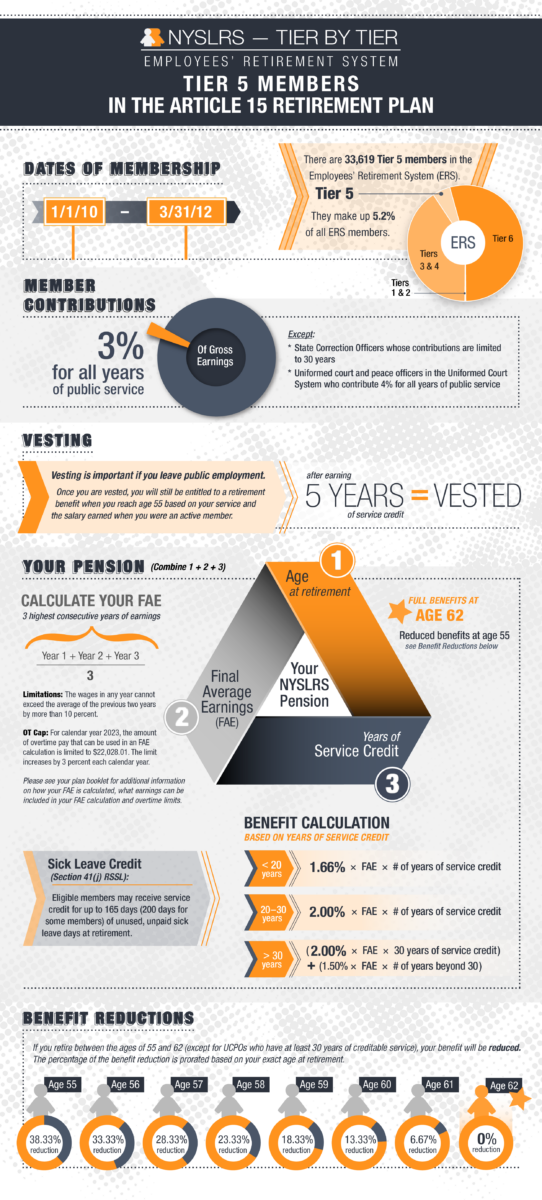
ERS has six tiers. Anyone who joined from January 1, 2010 through March 31, 2012 is in Tier 5. There were 33,619 ERS Tier 5 members as of March 31, 2022, representing 5.2 percent of ERS membership.

Most ERS Tier 5 members (unless they are in special retirement plans) retire under the Article 15 retirement plan. Check out the graphic below for the basic retirement information for Tier 5 members in this plan.

ERS Tier 5

Membership Milestones

As of April 9, 2022, Tier 5 members only need five years of service credit to become vested. If you are a vested member in the Article 15 retirement plan, you are eligible for a lifetime pension benefit as early as age 55. However, if you retire before the full retirement age of 62, your benefit will be reduced.*

If you retire with less than 20 years, the benefit is 1.66 percent of your final average earnings (FAE) for each year of service. If you retire with 20 to 30 years, the benefit is 2 percent of your FAE for each year of service. For each year of service beyond 30 years, you will receive 1.5 percent of your FAE. For example, with 35 years of service, you can retire at 62 with 67.5 percent of your FAE.

Where to Find More ERS Tier 5 Information

For more information about ERS Tier 5 membership, find your NYSLRS retirement plan publication. It’s a comprehensive description of the benefits provided by your specific plan.

You can check your service credit total and estimate your pension using Retirement Online. Most members can use our online pension calculator to create an estimate based on the salary and service information NYSLRS has on file for them. You can enter different retirement dates to see how your choices would affect your potential benefit.

Members may not be able to use the Retirement Online calculator in certain circumstances, for example, if they have recently transferred a membership to NYSLRS. These members can contact us to request an estimate or use the “Quick Calculator” on our website. The Quick Calculator generates estimates based on information you provide.


For information about other tiers, our series NYSLRS – One Tier at a Time gives you a quick look at the benefits for other tiers in both ERS and the Police and Fire Retirement System.

*Uniformed court officers or peace officers employed by the Unified Court System that have at least 30 years of credit may retire with a full benefit as early as age 55.