Category Archives: Retirees

News and Information for members of the retirement system who are enjoying their retirement

Public Pensions Give Economic Boost to Small Towns, Rural Areas

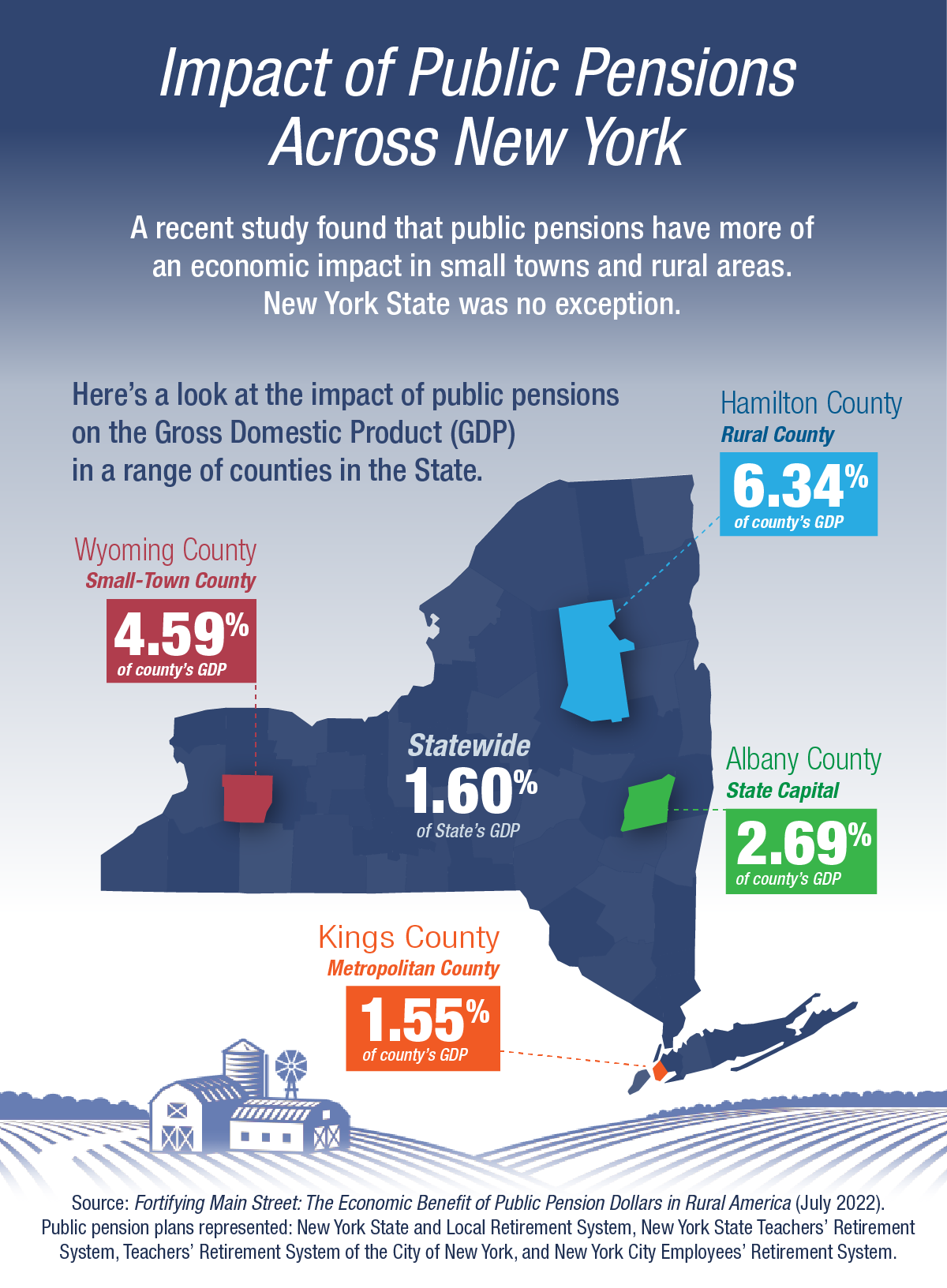
Small towns and rural areas in New York and across the United States get an important economic boost from public pensions, a recent study concludes.
Public Pensions Give Economic Boost to Small Towns and Rural Areas Across New York

Why Public Pensions Give an Economic Boost

Because of their smaller economies, less-populated counties benefit more from pension dollars than larger, urban counties, according to Fortifying Main Street: The Economic Benefit Of Public Pension Dollars In Rural America.

In many small towns and rural communities, the report notes, school districts and local governments are the largest employers. Those public employees typically remain in their communities after retirement, and the authors attribute the economic boosts they found to pension dollars spent locally on goods and services.

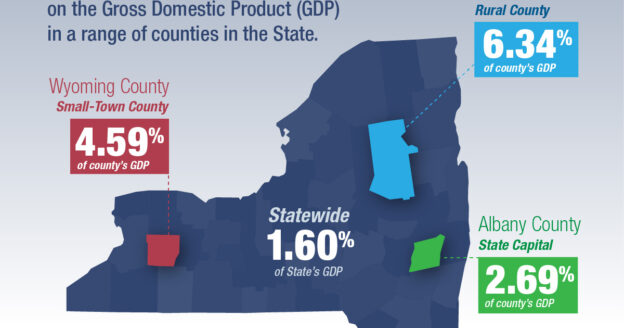
Across New York State, public pensions were responsible for 1.6 percent of gross domestic product (GDP) in 2018. (GDP, the total value of goods and services produced during a specific period, is a common gauge of economic activity.) However, during the same period:

  • Wyoming County in western New York, where a handful of villages dot a rural landscape, saw public pensions generate 4.6 percent of GDP.
  • Hamilton County, with fewer than 5,000 people, received an economic boost from public pensions that accounted for 6.3 percent of GDP.

The study’s findings are in line with data showing the impact NYSLRS retirees have on local economies and other studies about the economic benefits of pensions.

Notes on the Data

Fortifying Main Street, which was released in July by the National Institute on Retirement Security (NIRS), examines pension data from 2,922 counties in 43 states. Based on criteria used by the federal Office of Budget Management, it divides counties into three main categories: metropolitan, small-town (or micropolitan) and rural. The study also analyzes data from counties that are home to the state capital, because these places tend to have higher numbers of public retirees. In Albany County, public pensions generated 2.7 percent of GDP.

Hamilton County is the only county in New York defined as rural in the study, but 16 counties, including Wyoming County, fit the “small town” criteria. You can read the full report on the NIRS website.

The study uses pensions paid by NYSLRS, the New York State Teachers’ Retirement System, the Teachers’ Retirement System of New York City and the New York City Employees’ Retirement System in its data for New York State.


Retroactive Payments and Your NYSLRS Pension

Retroactive payments are lump sum payments you receive from your employer. These payments can be from new union contracts, arbitration awards or legal settlements that took place while you were on your employer’s payroll.

If you receive a retroactive payment from your employer, it could affect your pension benefit calculation.

How Retroactive Payments Can Affect Your Benefit

Retroactive Payments

Your final average earnings (FAE) are a major factor in your pension benefit calculation. It’s the average of your three (five for Tier 6 members) highest consecutive years of earnings. For most people, their highest years of earnings come at the end of their careers.

Retroactive payments are applied to the pay periods when they were earned, not when they were paid. So, retroactive payments can increase your FAE, and therefore your pension benefit, as long as the time period in which you earned that money is part of the time period your FAE is based on.

However, please be aware that the law limits the FAE of all members who joined on or after June 17, 1971. For most members, if your earnings increase significantly through the years used in your FAE, some of those earnings may not be able to be used toward your pension. You can find information about earnings limitations by tier, including examples, on the Final Average Earnings page on our website. If your FAE has already been affected by these earnings limits, your retroactive payment will not increase your pension benefit.

Payments Received Before Retirement. If you receive a retroactive payment from your employer before you retire, your employer will report your earnings to us through their regular reporting process. You do not need to notify us of payments you receive.

Payments Received After Retirement (State Employees). If you retired from New York State and you receive a retroactive payment after you retire, we will recalculate your pension automatically. NYSLRS receives State payroll information automatically and you do not need to notify us. You will receive correspondence from us explaining any change in your pension benefit.

Payments Received After Retirement (Non-State Employees). If you retired from a non-State employer and you receive a retroactive payment after you retire, send a letter to our Recalculation Unit in the Benefit Calculations & Disbursement Services Bureau. Please include a copy of your check stub and any correspondence you received from your employer related to the payment. Mail it to:

NYSLRS
Attn: BCDS – Recalculation Unit
110 State Street
Albany, NY 12244-0001

You can also email and upload this information to the Retirement System through our secure contact form.

Your Pension Recalculation Will Be Completed

We continue to receive a record number of pension recalculations and are working diligently to address them. If you are currently waiting for your pension amount to be recalculated, please rest assured that we will get to it. Once we complete your recalculation, you will receive payment of all the money you are owed, and a letter explaining the change in your pension amount.

Recent PEF Retroactive Payments

If you were a Public Employees Federation (PEF) member before retiring from State service, you may have recently received a retroactive payment. The current PEF contract, covering employment from April 1, 2019 through March 31, 2021, was ratified last summer. If you were a PEF member, worked during these dates and have not received your retroactive payment, please check with your previous employer.

If you retired recently and your FAE included earnings from on or after April 1, 2019, your NYSLRS pension will be increased automatically. You do not need to notify us that you received a retroactive payment.

CSEA Contract Negotiations

If you were a member of the Civil Service Employees Association (CSEA) before you retired, your contract and any retroactive payment is currently being negotiated. Contact CSEA if you have questions.

When Retirees Rejoin NYSLRS

rejoin NYSLRS

If you retire from public employment in New York State and later decide to go back to work in the public sector, you have the option of rejoining NYSLRS. However, if you are considering rejoining the Retirement System, you should understand how rejoining would affect your pension benefits.

Rejoining NYSLRS may increase your total service credit, allowing you to reach certain milestones that would increase your pension. An increase in earnings could also result in a higher pension. However, depending how long you work after rejoining, your new pension may not be higher than your original amount.

Note: This post applies to service retirees of the Employees’ Retirement System (ERS) or the Police and Fire Retirement System (PFRS) who are rejoining the same system. Different rules may apply to retirees of other retirement systems, retirees joining a system other than the one they retired from, and disability retirees.

What Happens to Your Pension When You Rejoin NYSLRS?

If you rejoin NYSLRS, your pension will be suspended. If you are in Tiers 2 through 6 and you earn less than two years of new service credit after you rejoin, your original pension would be reinstated when you retire the second time. Any new service credit and earnings would not affect your pension. (Tier 1 members would receive an additional benefit even if they earn less than two years of service in their new membership.)

If you earn two or more years of new service, you can either receive your original pension or you can receive a recalculated benefit that includes your additional service. If you choose the recalculated benefit, you will have to repay the entire pension amount you have already received, plus interest. (The pension amount you repay would be based on the Single Life Allowance rate.) You may repay that amount in a lump sum or by installments before you retire again — or request a permanent reduction to your new pension.

Other Factors

Here are other things to consider before you rejoin NYSLRS:

  • When you retire again, your new retirement date can delay your eligibility for the annual cost-of-living adjustment (COLA).
  • If you are in Tier 1 or 2, rejoining may affect your death benefit.

Where to Go for Help

If you are considering rejoining NYSLRS, we strongly recommend you speak with a customer service representative to discuss how rejoining would affect your benefits. You can call them at 866-805-0990 or send them a message using our secure contact form.

You may also wish to read our publication Life Changes: What If I Work After Retirement?

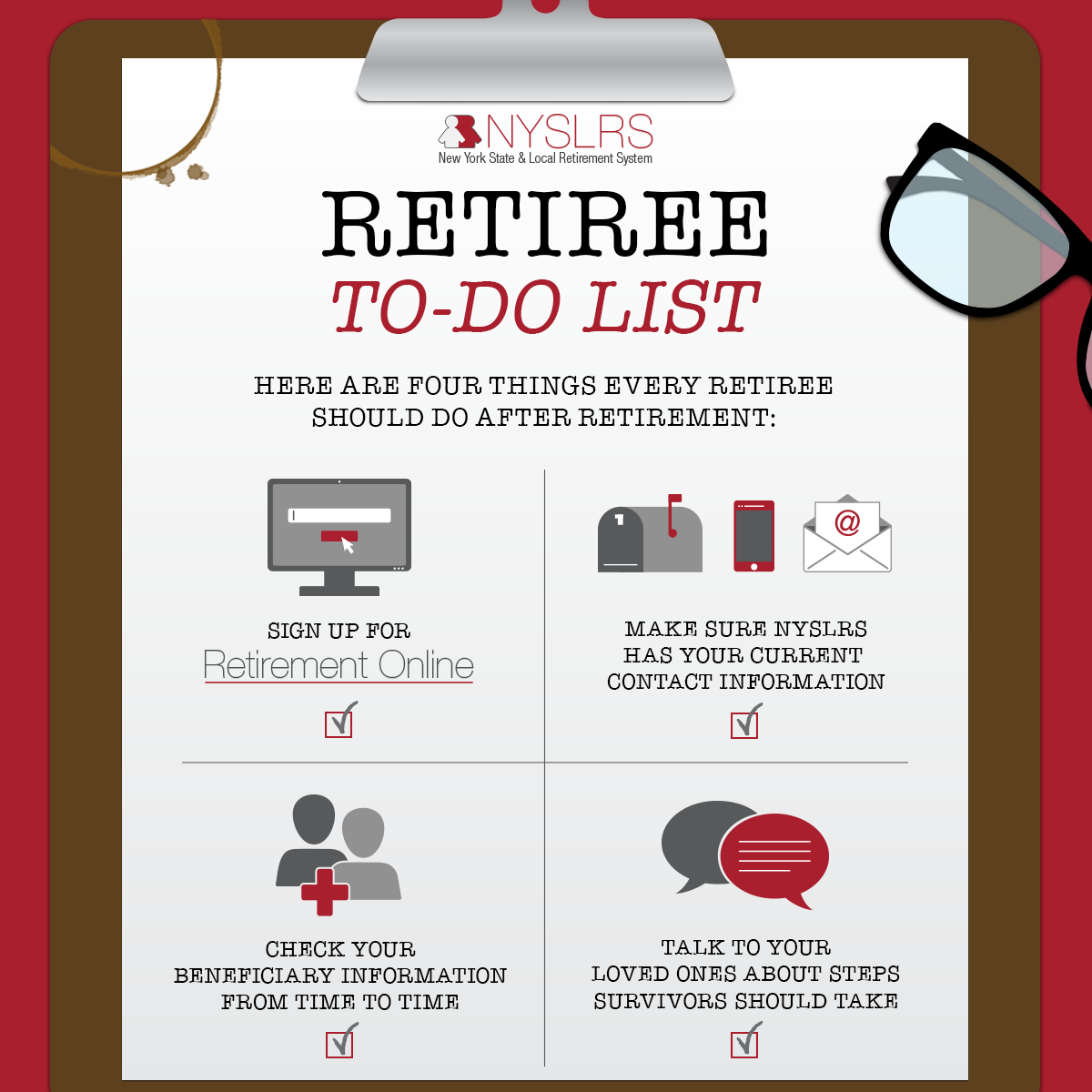
A Short To-Do List for After You Retire

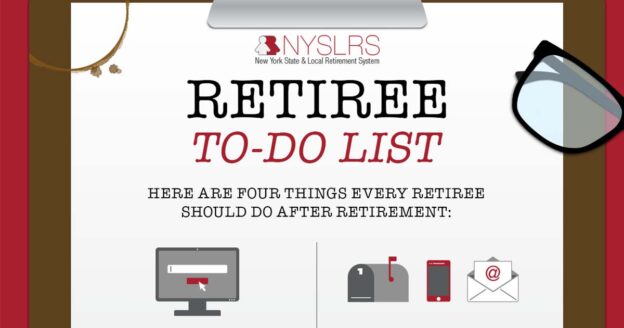
There are a few things you should do regarding your NYSLRS benefits after you retire. This way, wherever your retirement takes you, we can continue to provide you with the benefits and services available to our retirees.

A Short To-Do List for After You Retire

Sign Up for Retirement Online

If you don’t already have a Retirement Online account, this is a great time to sign up. Retirement Online provides a secure and convenient way to check important NYSLRS information, like the deductions from your latest payment and a summary of your benefits. You can also view or update beneficiary information and generate pension income verification letters right from your computer. We’ll be adding additional online features for retirees in the near future, so stay tuned.

Have New Contact Information? Let Us Know

If you move after you retire, let NYSLRS know your new address so you can be sure to get important communications about your benefits.

The Post Office usually won’t forward pension checks to another address. If you haven’t already, you can sign up for our direct deposit program. It’s the safe, hassle-free way to receive your monthly benefit. But there are other things you’ll want to receive from us after you retire, such as:

  • Your 1099-R form. Your pension isn’t taxed by New York State, but it is subject to federal income tax.
  • Your Retiree Annual Statement. It’s a helpful reference that spells out the benefits, credits and deductions you receive each year.
  • Any official notifications such as a net change in your benefits.
  • Your Retiree Notes newsletter.

There are several ways to update your address. The fastest way is through Retirement Online. Or, you can complete our secure contact form for street addresses within the United States. Be sure to fill out the entire contact form and provide both your old and new addresses.

You can also complete a Change of Address Form (RS5512) and mail it to:

NYSLRS
110 State Street
Albany, NY 12244-0001

You should also make sure we have your current email address. Having an email address on file means we can contact you quickly if we need to notify you about an update to your NYSLRS benefits. If you haven’t updated your email address with NYSLRS, update it in Retirement Online, send it to us using the secure email form or send it to us with your Change of Address Form (RS5512).

Keep Your Beneficiary Information Current

Reviewing your beneficiary designations periodically is important. By keeping them up to date, you ensure that any post-retirement death benefit will be distributed to your loved ones according to your wishes. You can use Retirement Online to change your death benefit beneficiaries at any time, or contact our Call Center and we will send you the necessary form.

Read Our Guide for Retirees

Check out our publication, Life Changes: A Guide for Retirees (VO1705), for information about other benefits you may be entitled to and the services we offer after you retire.

Power of Attorney

Under normal circumstances, NYSLRS won’t release your benefit information – even to close family members­ – without your permission. However, if we have an approved copy of your power of attorney (POA) form on record, we can discuss your information with the person you named as your agent in your POA.

For example, your agent could ask for details about your pension payments, get help completing a loan application or call us for clarification if you don’t understand a letter you received.

father and son discuss power of attorney

Your agent could be your spouse, another family member or a trusted friend. You may designate more than one person as your agent, and you may authorize those agents to act together or separately. You may also designate “successor agents” to act on your behalf if the primary agent is unable or unwilling to serve.

A POA form may be filed with NYSLRS at any time, so there’s no need to wait until a “life event” happens to file. With a POA already on record, the designated agent can act immediately in case of emergency, hospitalization or unexpected illness.

What Can Agents Do?

The agent named in your POA is authorized to act on your behalf and conduct business with NYSLRS for you.

Agents can file applications and forms, such as service or disability retirement applications. They can get account-specific benefit information, request copies of retirement documents, update addresses and phone numbers, and take out loans. For retirees, agents can change the amount withheld from your pension for taxes.

The NYSLRS POA Form

NYSLRS provides a Special Durable Power of Attorney form that is specific to retirement transactions and meets all New York State legal requirements.

If you use the NYSLRS POA form, and your agent or successor agent is your spouse, domestic partner, parent or child, they have “self-gifting authority.” That means they can designate themselves as a beneficiary of your pension benefits or, if you are not yet retired, choose a retirement payment option that provides for a beneficiary after your death and designate themselves as a beneficiary for that benefit.

If your agent or successor agent is not your spouse, domestic partner, parent or child, they do not automatically have self-gifting authority. If you want them to be able to designate themselves as beneficiaries, you should indicate that in the Modifications section of the POA. You should identify your agent by name and specify the authority you want granted to them.

It’s important to note that the NYSLRS POA form only covers Retirement System transactions. It does not authorize an agent to make health care decisions or changes to a Deferred Compensation plan.

Changes to the POA Law

The law governing POA requirements was changed effective June 13, 2021. Any POA executed on or after that date must comply with the following requirements (the NYSLRS form complies with the requirements):

  • All POAs must be signed by two disinterested witnesses (witnesses who are not listed as an agent in the POA or named in the POA as a person who can receive gifts).
  • The use of a Statutory Gift Rider to grant gifting authority has been eliminated. If you do not use the NYSLRS POA form and instead submit a separately prepared Statutory POA form, gifting authority, even for a close family member, must be granted in the Modifications section of the POA. (See our Power of Attorney page for details.)

If you have an approved POA on file with NYSLRS, you do not need to send a new one. POAs executed before June 13, 2021, will be reviewed in accordance with the laws in effect at the time. POAs executed on or after June 13, 2021, that use an old POA form or do not comply with other requirements of the new law will not be valid.

How to Submit a POA Form

You can scan and email a copy of your POA to NYSLRS using our secure email form.

You can also mail your POA (original or photocopy). You may wish to mail it certified mail, return-receipt requested, so you know when NYSLRS receives it. Mail it to:

NYSLRS
110 State Street
Albany, NY 12244-0001.

Find Out More

A power of attorney is a powerful document. Once you appoint someone, that person may act on your behalf with or without your consent. We strongly urge you to consult an attorney before you execute this document.

You may revoke your POA at any time by sending us a signed, notarized statement.

Please read the Power of Attorney page on our website for additional information.

NYSLRS Retirement Online Routine System Maintenance

Retirement Online will be unavailable for a few days while we complete routine year-end maintenance. Retirement Online will be offline from 3:00 pm on Tuesday, December 29 until 7:00 am on Friday, January 1.

Using the NYSLRS Automated Phone System During the Maintenance Period

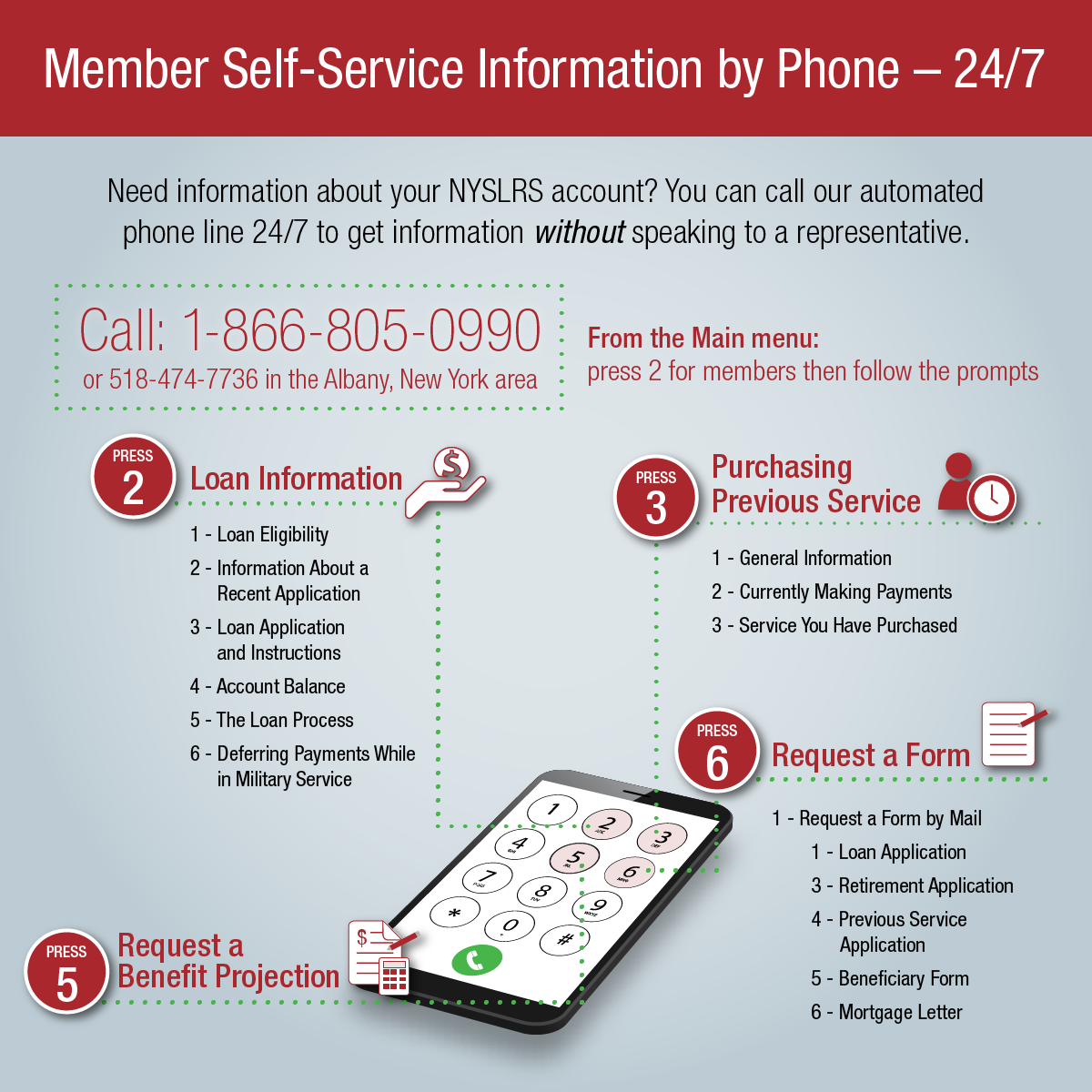
Another way you can get information about your NYSLRS benefits is through our automated phone system, which allows you to get personal account information, order forms and conduct other retirement transactions without having to speak with a customer service representative. The automated phone system is generally available 24 hours a day, seven days a week, so you can conduct business with NYSLRS on your schedule.

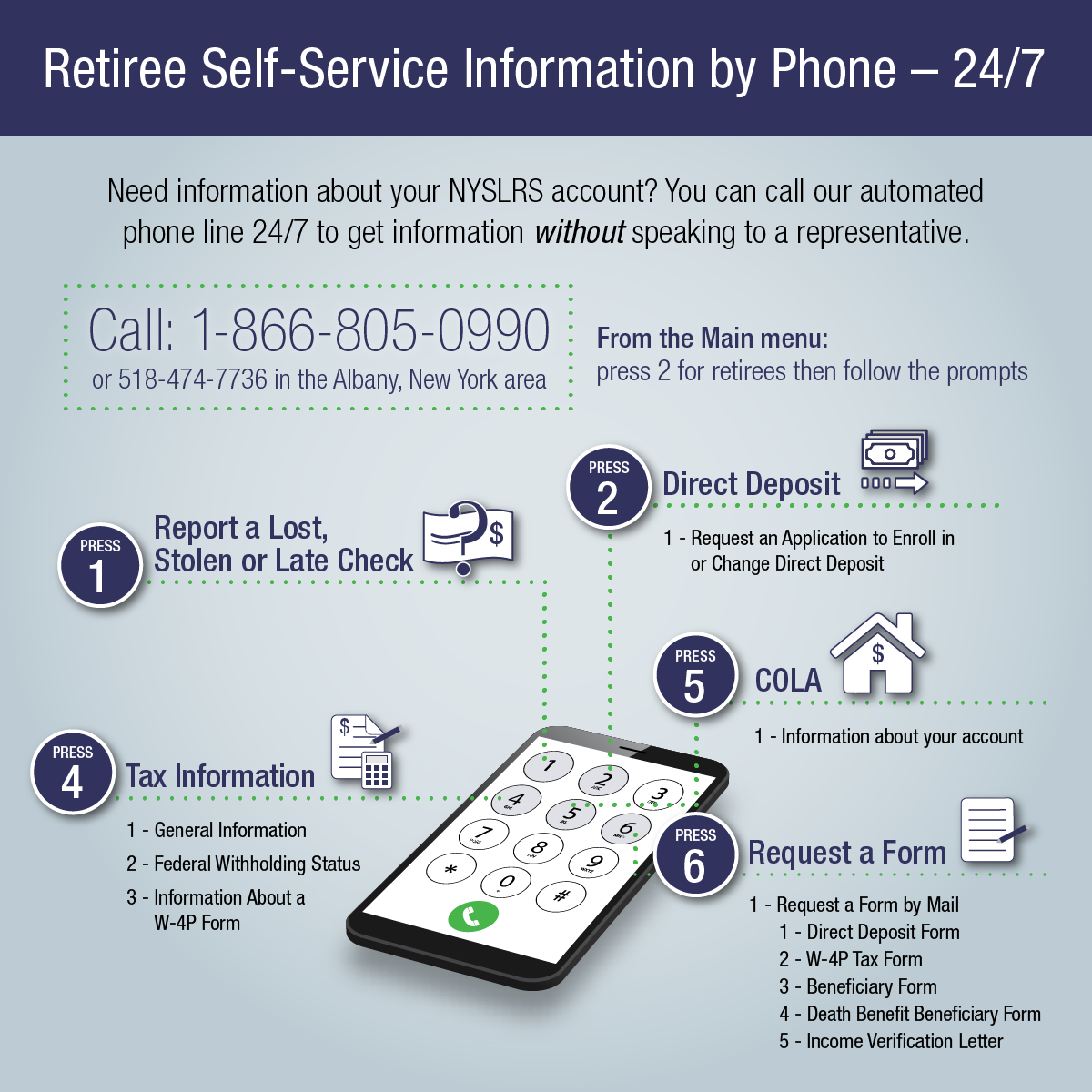
Retirees can use the automated phone system to:

  • Request that NYSLRS forms be mailed to them,
  • Report a lost, stolen or late pension check,
  • Get tax information,
  • Get information about cost-of-living adjustments (COLAs), and
  • Request a direct deposit form.

Members can use the automated phone system to:

  • Request that NYSLRS forms be mailed to them,
  • Find out if they are eligible for a loan or get their current loan balance,
  • Request that a benefit projection be mailed to them, and
  • Get personalized information about purchasing credit for previous service.

Here are the retiree menu options for the phone system:

automated phone system for retirees

Here are the member menu options for the phone system:

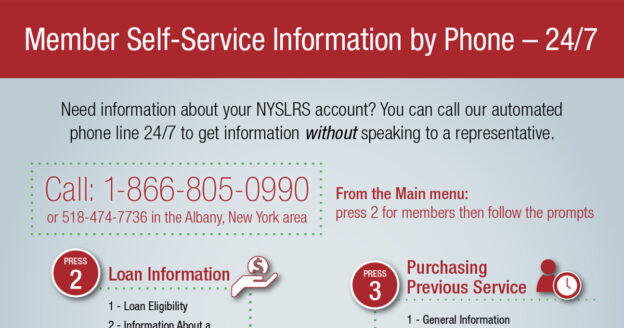
automated phone system for members

Other Ways to Get Information

If you are looking for general information about NYSLRS benefits, you can:

Protecting Your Identity Online: Tips for Secure Passwords

Secure Passwords

The rules for password creation have changed in recent years, so you may have to unlearn some of the things you’ve been taught in the past about secure passwords.

The National Institute of Standards and Technology (NIST), the federal agency that created the original password guidelines, recently revised those guidelines. Its current recommendations are based on research on both the habits of users and the techniques of hackers. Here are some of their findings:

  • Length is a major factor in a password’s strength, so the longer the password, the better.
  • Complex passwords, with a mix of character types, are hard for people to remember, and do little to deter hackers.
  • Strong passwords can be created from short phrases that are easy for you to remember, but would be meaningless to anyone else.
  • Passwords may be used indefinitely as long as they’re strong and have not been compromised. Obviously, if you have an account with a company that just had a data breach, you’ll want to change that password.

Other Ideas on Secure Passwords

Changing passwords every 30, 60 or 90 days was recommended for thwarting hackers, but some security experts now question that tactic. Changing passwords on a regular schedule may have little security value and can lead to bad habits. Research has shown that people tend to make only minor changes when updating their passwords or create weak passwords that are easier for them to memorize. You’re better off creating a strong password, memorizing it and holding on to it.

While NIST has changed some of its guidelines, some of the old ones still apply. Don’t share your secure passwords with anyone, or leave them on sticky notes by your computer. Create unique passwords for important accounts, such as your bank account and your email, and avoid bad passwords such as “password,” “12345678,” “qwerty” and “iloveyou.”

Too Much Free Time?

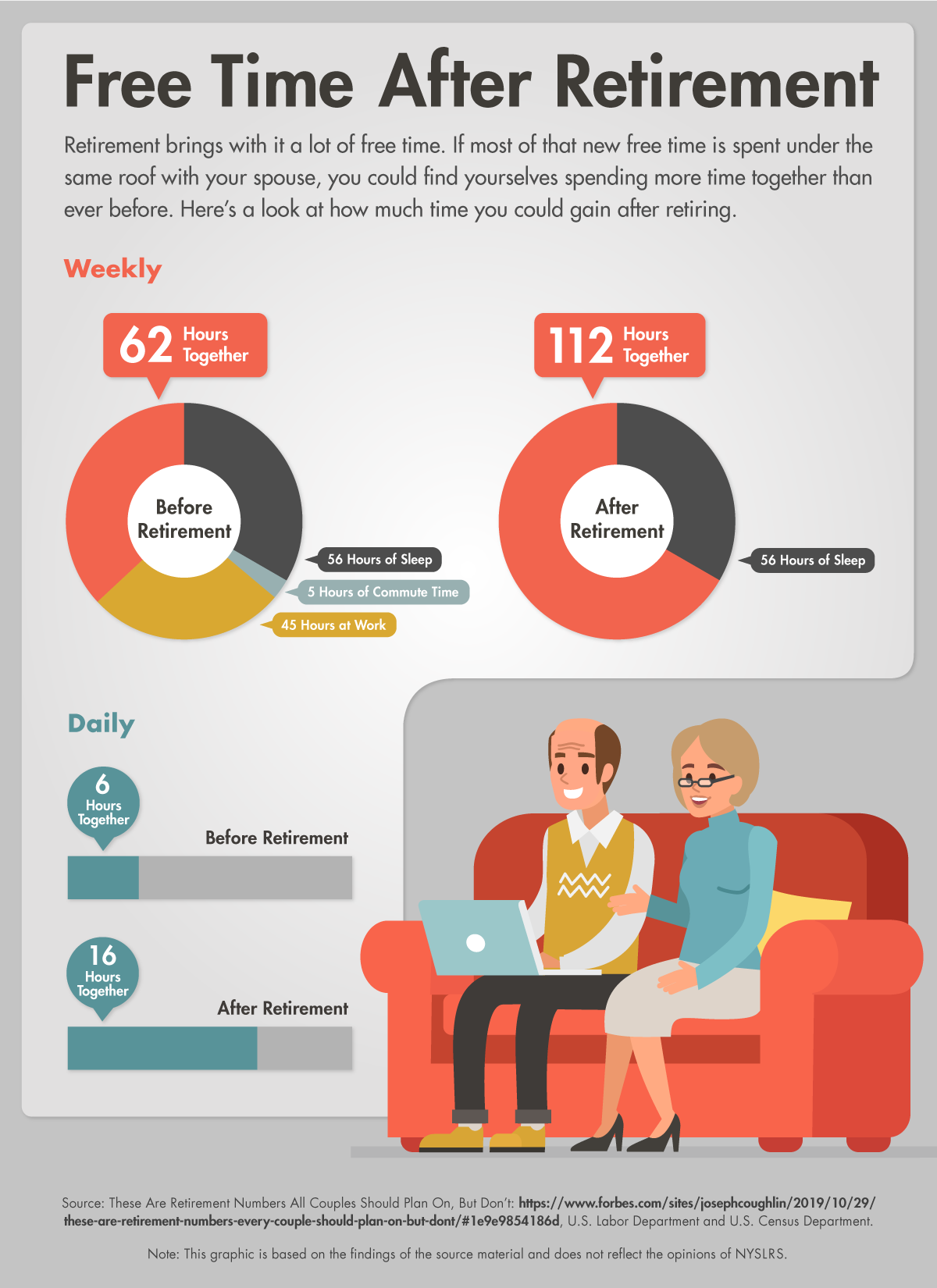
Could retirement bring you too much free time? When people think about retirement planning, they usually think about money. Will you have enough to maintain a comfortable lifestyle for a retirement that could last decades? But regardless of your finances, there is one thing you’re likely to have a lot more of after you retire: time. Figuring out how you’ll spend that time should also be part of your retirement planning process.

Free time after retirement

Counting the Hours

According to the U.S. Labor Department, the average American worker spends about nine hours a day at work. Add another hour a day commuting time, and that’s ten hours a day or 50 hours each week.

All those hours you spent working, and traveling to and from work, will instantly become free time. While that may sound great to many people, all that extra time can have downsides.

If not put to good use, that extra time can lead to boredom and even depression. What’s more, if you’re married and you and your spouse are both retired, you may find yourselves wondering how to spend that time together.

Make a Plan for Free Time

For many couples, having extra time together is a dream come true. However, some couples find themselves getting in each other’s way, and that can sometimes lead to problems.

But there are ways to cope. For example, finding activities outside the home, both together and separately, can help. As with most things, you’ll be better off if you recognize there may be a problem, discuss it with your spouse, and come up with a plan.

There are more thoughts on the subject, and some good advice, in this article: 10 Tips to Help Your Marriage Survive Retirement.

Retirement Planning Tip: Required Minimum Distributions

Required Minimum DistributionsIf you have tax-deferred retirement savings (such as certain 457(b) plans offered by NYS Deferred Comp), you will eventually have to start withdrawing that money. After you turn 70½, you’ll be subject to a federal law requiring that you withdraw a certain amount from your account each year. If you don’t make the required withdrawals, called Required Minimum Distributions (RMDs), you could face significant penalties.
RMDs are never eligible for rollover into other retirement accounts. You must take out the money and pay the taxes.

Calculating the Distribution

The RMD amount must be calculated annually. It’s based on the account’s balance at the end of the previous calendar year and the life expectancy of you and your beneficiary. Check out AARP’s Required Minimum Distribution Calculator for an easy way to determine your required distributions. Many retirement plan administrators, including the New York State Deferred Compensation Plan, will inform you of your RMD amount, but it’s your responsibility to take the required distribution.

Potential Penalty

If you don’t take the required distribution, or if you withdraw less than the required amount, you may have to pay a 50 percent tax on the amount that was not distributed. (You must report the undistributed amount on your federal tax return and file IRS Form 5329.)

The IRS may waive the penalty if you can show that your failure was due to a “reasonable error” or that you have taken steps to correct the situation. You can find information about requesting a waiver on page 8 of the Form 5329 instructions.

What Accounts Require Minimum Distributions?

Most retirement accounts you’re familiar with require these annual withdrawals:

  • 457(b) plans
  • IRAs (traditional, SEP and SIMPLE)
  • 401(k) plans
  • 403(b) plans
  • Profit-sharing plans
  • Money purchase plans

Since contributions to Roth IRAs have already been taxed, the IRS does not require distributions from Roth IRAs at any age.

As with most things investment-related, a lot depends on your particular circumstances. If you have questions, contact your financial advisor or your plan administrator.

NYSLRS – One Tier at a Time: ERS Tier 1

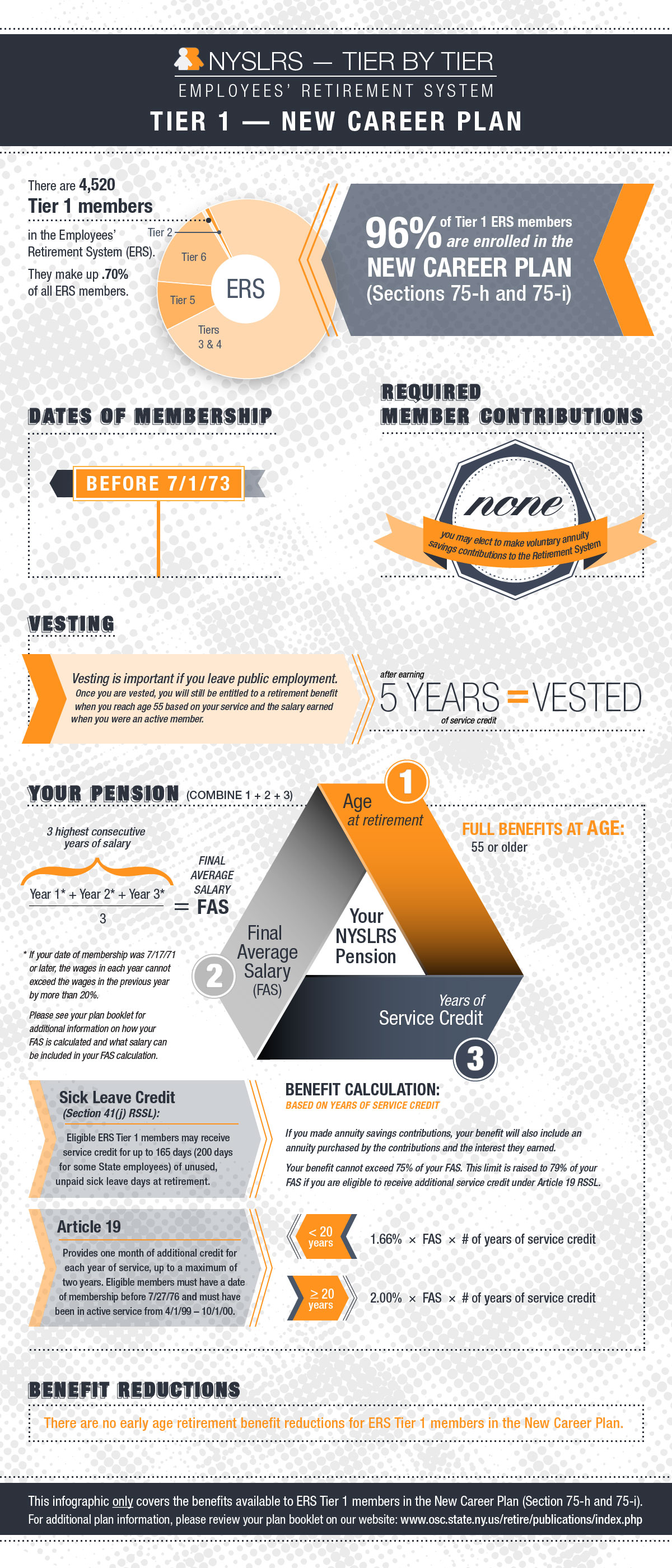
When you joined the New York State and Local Retirement System (NYSLRS), you were assigned to a tier based on the date of your membership. There are six tiers in the Employees’ Retirement System (ERS) and five in the Police and Fire Retirement System (PFRS) — so there are many different ways to determine benefits for our members. Our series, NYSLRS – One Tier at a Time, walks through each tier and gives you a quick look at the benefits members are eligible for before and at retirement.

One of our smallest tiers is ERS Tier 1, which represents 0.7 percent of NYSLRS’ total membership. Overall, there are 4,520 ERS Tier 1 members. Today’s post looks at the major Tier 1 retirement plan in ERS – the New Career Plan (Section 75-h or 75-i).
ERS-Tier-1-Benefits_001
If you’re an ERS Tier 1 member in an alternate plan, you can find your retirement plan publication below for more detailed information about your benefits:

Be on the lookout for more NYSLRS – One Tier at a Time posts. Want to learn more about the different NYSLRS retirement tiers? Check out some earlier posts in the series: