
Tag Archives: pension fund

10 Things Members Should Know

NYSLRS is one of the largest retirement systems in the world, administering benefits for more than 1.2 million members, retirees and beneficiaries. Take a look inside NYSLRS and brush up on your NYSLRS knowledge—here are 10 things members should know.

Retired? Check out 10 Things Retirees Should Know.

1. Retirement Online is the Fastest, Most Convenient Way to Do Business With NYSLRS

10 Things Members Should Know Retirement Online is the fastest way to manage your NYSLRS account. Skip printing forms, having them notarized and sending them through the mail. When you submit your requests through Retirement Online, NYSLRS has them immediately, and your changes will be completed more quickly. It’s convenient and secure. Check out what members can do in Retirement Online.

If you don’t have an account or for help signing in to an existing account, check out our Retirement Online tools and tips for step-by-step instructions to register, reset your password, unlock your account and more.

2. Your Pension is a Lifetime Benefit—And Your Pension Benefits are Secure

NYSLRS pensions are defined benefit plans, also known as traditional pension plans. When you retire, you will receive a monthly pension payment for the rest of your life. Your pension will be calculated using a preset formula based on your earnings and years of service—it will not be based on the individual contributions you paid into the system. Member contributions support the benefits earned by current and future retirees and are an important asset of the Common Retirement Fund, which holds and invests the money used to pay NYSLRS benefits. The Fund is widely recognized as one of the best-funded and best-managed public pension plans in the nation. Comptroller Thomas P. DiNapoli is administrator of NYSLRS and trustee of the Common Retirement Fund.

3. ‘Go Green’ and Get Your Important Documents Sooner

You can help us ‘go green’ and reduce paper waste by choosing email as your delivery preference for correspondence and other important documents, such as your Member Annual Statement. When you have something to view, we’ll send an email notifying you to sign in to Retirement Online. And it will save time—you’ll get access to your important documents sooner than printed copies are mailed. Learn how to get email notifications for important documents.

4. Your Tier Determines Your Benefits

Your tier, which is based on your date of membership, determines your benefits, such as eligibility for death benefits or taking a NYSLRS loan and the formula used in the calculation of your benefits.

5. Vested Means You Qualify for a Retirement Benefit

Becoming vested is a crucial milestone for NYSLRS members. It means you have earned enough service to qualify for a retirement benefit once you meet the minimum age or service requirements established by your retirement plan. All members who have at least five years of service credit are vested.

6. Review Your Beneficiaries Periodically

NYSLRS retirement plans provide death benefits for beneficiaries of eligible members who die before retiring. It’s a good idea to review your beneficiaries from time to time to make sure they reflect your current wishes. The beneficiary you named before might not be the one you would choose today. You should also review the contact information for your named beneficiaries so we can find them when needed.

7. Request Additional Service Credit as Early in Your Career as Possible

Service credit is a major factor in calculating your pension benefit. You earn a year of service credit for each year of full-time employment with a participating employer. You may also be able to request additional credit if you worked for your current or another public employer before joining NYSLRS or if you served in the U.S. Armed Forces and received an honorable discharge from active military duty. You must submit your request before retirement, and you should do it as early in your career as possible.

8. Estimate Your Pension

Finding out how much you can expect to receive is an important part of retirement planning. Most members can estimate their pension using Retirement Online in just a few quick and easy steps. Retirement Online uses your current earnings and service information to calculate your estimate, including your final average earnings (FAE) and the amounts for the pension payment options available to you. You can fine-tune your estimate or see how different choices would affect your benefit by entering different retirement dates or a beneficiary’s date of birth.

9. Supplement Your Pension with Retirement Savings

Think of retirement security as a three-legged stool. Each leg is a source of income to help support you when your working days are done. It’s important to understand all your potential sources of income to effectively plan for the future and boost your retirement confidence. Your pension can provide a significant part of your retirement income, but it’s a good idea to supplement your pension with retirement savings and start saving early so your money has time to grow.

10. Your Retirement Plan Publication is an Essential Resource

Your retirement plan publication is an essential resource that explains your NYSLRS benefits in detail—how long you’ll need to work to receive a pension, how your benefit is determined, what death and disability retirement benefits may be available, and more. You should consult it throughout your career, but it’s especially important to read as you prepare for retirement.
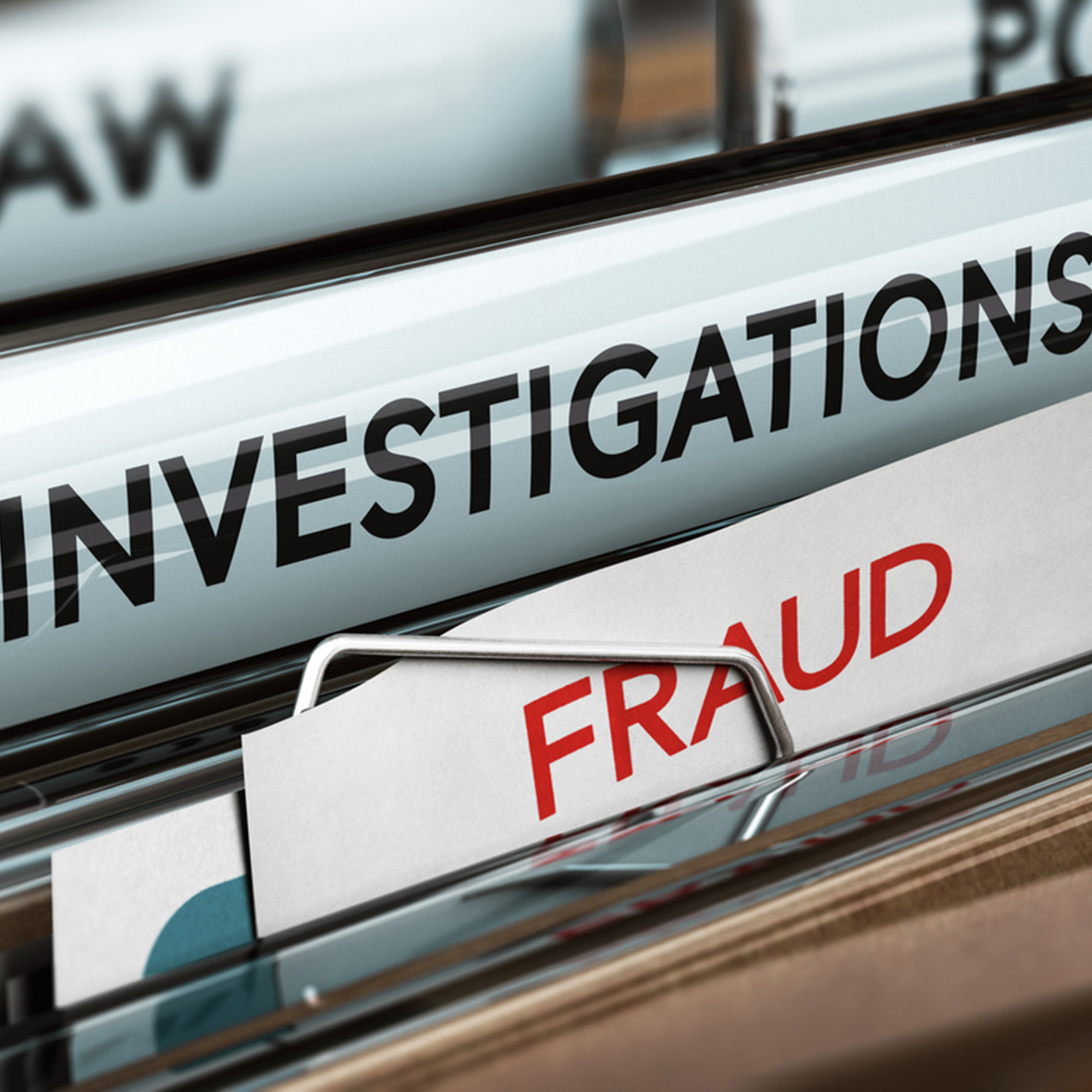
Fighting Fraud and Protecting Pension Benefits

Fighting Fraud and Protecting Pension Benefits

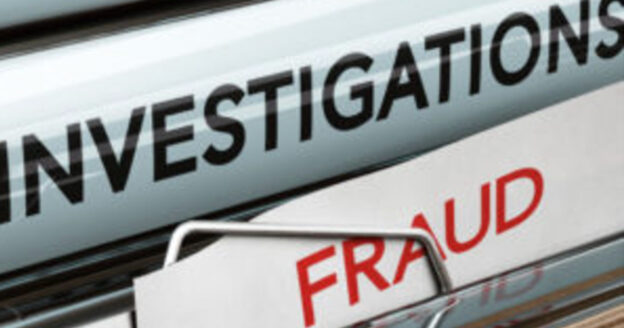
Since taking office, New York State Comptroller Thomas P. DiNapoli has fought the abuse of public funds. One of his top priorities is protecting NYSLRS and its retirees from pension fraud.

The Comptroller’s Division of Investigations regularly partners with federal, state and local law enforcement in New York and across the country to bring corrupt individuals to justice and recoup stolen NYSLRS money. Over the past several years, pension fraud investigations have led to 57 arrests and the recovery of over $5.8 million.

Here are some cases from earlier this year:

Joint Investigation Uncovers Caretaking Scheme

In May 2024, a joint investigation between the Comptroller’s office, the Rensselaer County District Attorney and the New York State Police led to the arrest of an Albany woman and man for allegedly stealing more than $200,000 in pension and Social Security payments from an 86-year-old retiree.

The defendants engaged in a caretaking scheme that left the elderly victim in deplorable living conditions and resulted in home foreclosure. They persuaded the victim to let them pay his bills, however, they did not pay the victim’s mortgage, property taxes or other bills for several years. This caused the foreclosure of the victim’s home, the repossession of his vehicle, and his electricity to be turned off.

As a result of the investigation, the victim was removed from the home and received necessary treatment.

In November 2024, one of the defendants pleaded guilty to grand larceny in the second degree and is awaiting sentencing. The second defendant was indicted by a Rensselaer County Grand Jury on charges of grand larceny in the second degree and the matter is currently pending in court.

Son Impersonates Father to Continue Receiving Pension

In 2017, a NYSLRS pensioner who had retired from the Nassau County Clerk’s Office in 1992, moved to Wyoming with his son. The retiree was never heard from again, and it is believed he died in Wyoming. His pension payments should have stopped when he died, but his son never reported his death.

In fact, the son went to great lengths to conceal his father’s death and continue receiving his pension and social security payments. He even whitened his hair and eyebrows to impersonate his deceased father.

But a call to the Comptroller’s Fraud Hotline prompted an investigation, which included the U.S. Attorney’s Office, the Social Security Administration, the U.S. Postal Inspection Service and the FBI.

The son was arrested on federal fraud charges in 2023. In February 2024, the son was sentenced to five years in prison and ordered to repay the $194,000 he stole in NYSLRS pension and Social Security benefits.

Man Steals Deceased Sister-in-Law’s Pension Payments

In October 1986, a stenographer from the Supreme Court, Appellate Division, retired with a disability retirement and the Single Life Allowance pension payment option. That means, when she died in January 2019, her monthly pension payments should have ended. Once NYSLRS discovered her death in July 2022, payments were stopped, and an investigation was launched.

A forensic analysis was completed on the bank account where the pension payments were being deposited, which was a joint account in the name of the retiree and her brother-in-law. The investigation found that the brother-in-law diverted over $50,000 in pension payments made after his sister-in-law’s death and used the money to pay credit card bills, travel and make online purchases.

The brother-in-law was arraigned on a charge of grand larceny in Albany County Court. The matter is pending in court.

You Can Help Fight Fraud

If you are aware of potential pension fraud, visit the Comptroller’s Fighting Public Corruption page to file a complaint online, or call the Fraud Hotline at 888-672-4555.

The Common Retirement Fund: 100 Years of Strength and Security

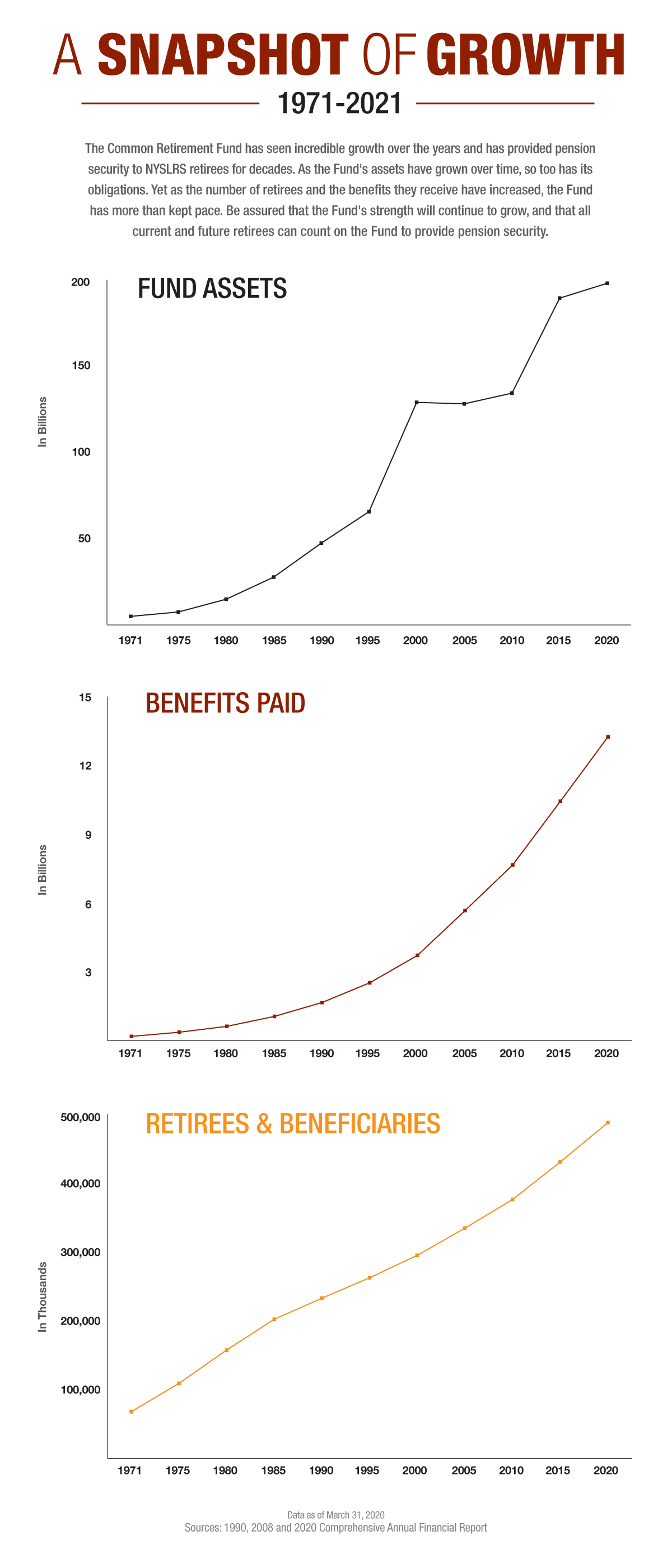
In 1921, NYSLRS’ pension fund held several million dollars and provided benefits to just a few dozen State employees. Today, the Common Retirement Fund (Fund) provides more than a billion dollars per month to hundreds of thousands of retirees and beneficiaries.

The System’s founders showed foresight in establishing the framework for a sustainable retirement system capable of providing long-term pension security for its members and retirees. Today, one hundred years later, we are considered one of the strongest public pension funds in the country, thanks in large part to the stewardship of Comptroller DiNapoli, trustee of the Common Retirement Fund and administrator of NYSLRS for the past 14 years.

Comptroller DiNapoli’s diligent efforts to maintain the financial well-being of the Fund, the fact that NYSLRS’ participating employers contribute their share into the Fund, and New York’s constitutional requirement that lifetime pension benefits be guaranteed to all NYSLRS retirees — all these elements combine to ensure that NYSLRS retirees will enjoy secure benefits for generations to come.

Common Retirement Fund - A Snapshot of Growth

Investments

The Common Retirement Fund has been widely recognized as one the best-funded and best-managed public pension fund’s in the nation. (In June 2020, the Pew Charitable Trusts ranked NYSLRS as the second-best-funded public retirement system in the nation, based on 2018 data.) The cornerstone of the Fund’s reputation is its sound investment policies. At the direction of Comptroller DiNapoli, Fund managers use a long-term investment strategy designed to take advantage of growth opportunities during good economic times, while helping the Fund weather economic downturns.

The Comptroller seeks the input of a wide range of internal and external advisors, consultants and legal counsel who help to determine the best investment choices and allocation of assets for the Fund. These advisors provide independent advice and oversight of all investment decisions, serve as part of the chain of approval on all investment decisions before they reach the Comptroller for final approval and participate on advisory committees that meet periodically throughout the year.

Fund assets are invested in a diversified portfolio. About 55 percent of the assets are invested in publicly traded stocks. Other investments include bonds, mortgages, real estate and private equity.

The Fund is also strengthened by a forward-looking approach to addressing climate change-related investment risks and capitalizing on the opportunities created by the transition to a low-carbon economy. Comptroller DiNapoli recognizes that climate change poses an enormous threat to the global economy and to the Fund’s investment portfolio. Recently, he announced plans to transition the Fund’s portfolio to net zero greenhouse gas emissions by 2040. This process will include a review of investments in energy companies and, where consistent with his fiduciary responsibility to maintain the long-term financial health of the Fund for NYSLRS members, divestment of companies that don’t meet minimum standards. This policy will help ensure that the Fund adapts to a changing global economy and maintains its growth in coming decades.

The Common Retirement Fund’s Impact on New York Businesses

The Common Retirement Fund’s In-State Private Equity Program invests in new and expanding New York companies and makes capital available to qualifying small businesses. As of March 31, 2020, the Fund’s private equity portfolio included investments in over 330 New York businesses with a total value of $1.9 billion. These investments boost the State’s economy while at the same time generating significant returns for the Fund.

Looking Forward

As the Common Retirement Fund’s assets have grown over the years, so have its obligations. As of March 31, 2020, there were 487,407 NYSLRS retirees and beneficiaries, who were paid $13.4 billion in benefits over the previous year. That’s up from 67,689 retirees and beneficiaries, who were paid $194 million in benefits in 1971. Roughly a third of NYSLRS members are expected to retire over the coming decade.

Comptroller DiNapoli’s focus on continuing the Fund’s record of strong growth ensures that the Retirement System will be ready to meet the challenges of the future. The New York State Common Retirement Fund’s estimated overall investment return was 33.55 percent for the State fiscal year that ended March 31, 2021, reflecting the financial markets’ dramatic rebound from lows reached during the COVID-19 pandemic. The return on investments increased the Fund’s value to an estimated $254.8 billion. More than 1.1 million NYSLRS members, retirees and beneficiaries can continue to rely on the Retirement System for their retirement security.